Copper Cargo Theft Surge: What the 2025 Cargo Theft Report Means for Your Freight
Mar 4, 2026
Scroll to explore
TLDR |
|
Two trends collided in 2025: copper prices hit record highs, and cargo theft losses hit record highs. That's not coincidence — it's criminal arbitrage at scale.
Most freight security guides point to GPS trackers and sealed trailers. Organized crime groups stopped caring about those years ago. Today's cargo thieves intercept shipments before a truck leaves the dock — using social engineering, identity fraud, and the information gaps inside fragmented broker networks to redirect your freight to criminal drop points.
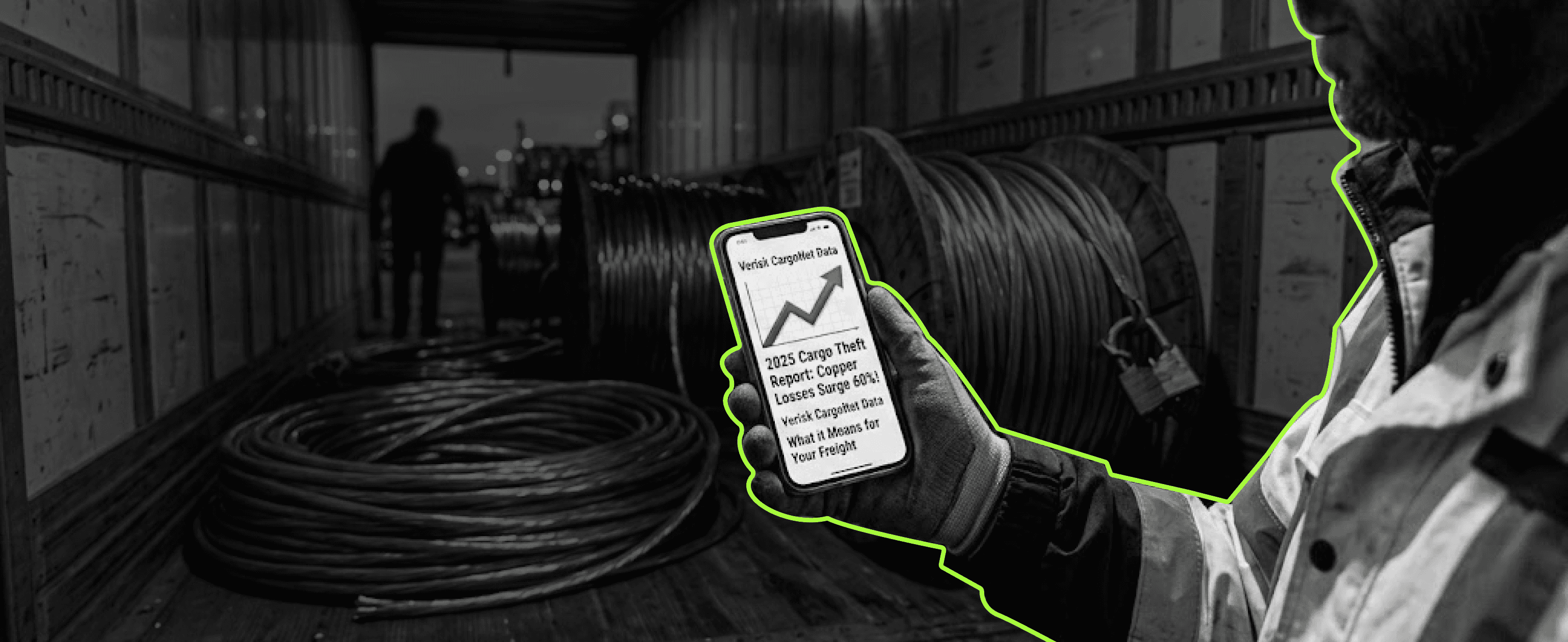
According to the 2025 Verisk CargoNet cargo theft report, total estimated losses surged to nearly $725 million — a 60% increase from 2024 — even as overall incident volume held flat. Metals theft surged 77%. The per-theft average climbed 36% to $273,990. Criminals aren't multiplying. They're just stealing smarter.
If your copper or high-value freight still moves through multi-broker networks with minimal carrier verification, the data says you're operating inside the attack surface — not outside it.
Why 2025 Cargo Theft Losses Surged 60% While Incident Volume Held Steady
The numbers look contradictory until you understand the shift underneath them.
Verisk CargoNet recorded 3,594 total supply chain crime events across the United States and Canada in 2025 — nearly identical to 2024's 3,607. But confirmed cargo theft incidents climbed 18%, from 2,243 to 2,646, and average loss per incident rose 36%. Keith Lewis, VP of Operations at Verisk CargoNet, put it plainly: criminal enterprises are targeting high-value shipments rather than relying on opportunistic theft — and that precision is why losses can rise 60% even when raw counts stay flat.
Metric | 2024 | 2025 | Change |
|---|---|---|---|
Confirmed cargo theft incidents | 2,243 | 2,646 | +18% |
Average value per theft | $202,364 | $273,990 | +36% |
Estimated total losses | ~$455M | ~$725M | +60% |
Metals theft incidents | Baseline | — | +77% |
Food & beverage theft | Baseline | — | +47% |
Source: Verisk CargoNet 2025 Annual Cargo Theft Report
Why Cargo Theft and Copper Prices Are Moving in the Same Direction
Copper prices rose more than 40% in 2025, briefly exceeding $13,000 per tonne on the London Metal Exchange. J.P. Morgan's commodity research ties the surge to AI data center buildouts, green energy infrastructure, and mine supply disruptions in Indonesia, Chile, and Peru — structural drivers keeping prices elevated into 2026.
Cargo thieves read the same market signals. CargoNet's Q2 2025 data showed metals theft nearly doubling in a single quarter — timing that tracked precisely with copper trading at or near record highs. By year-end, the full annual report confirmed metals theft climbed 77%, with demand for copper products identified as the core driver. Higher commodity value means higher criminal ROI per ton stolen. It's supply and demand logic applied to freight crime.
How Organized Crime Targets High-Value Shipments Beyond Traditional Hotspots
The geographic story in 2025 is as important as the commodity story. Theft activity continued to expand beyond traditional hotspots: California led with 1,218 incidents, but New Jersey surged 50%, Indiana rose 30%, and Pennsylvania climbed 24%. Organized crime groups are deliberately testing lower-awareness markets.
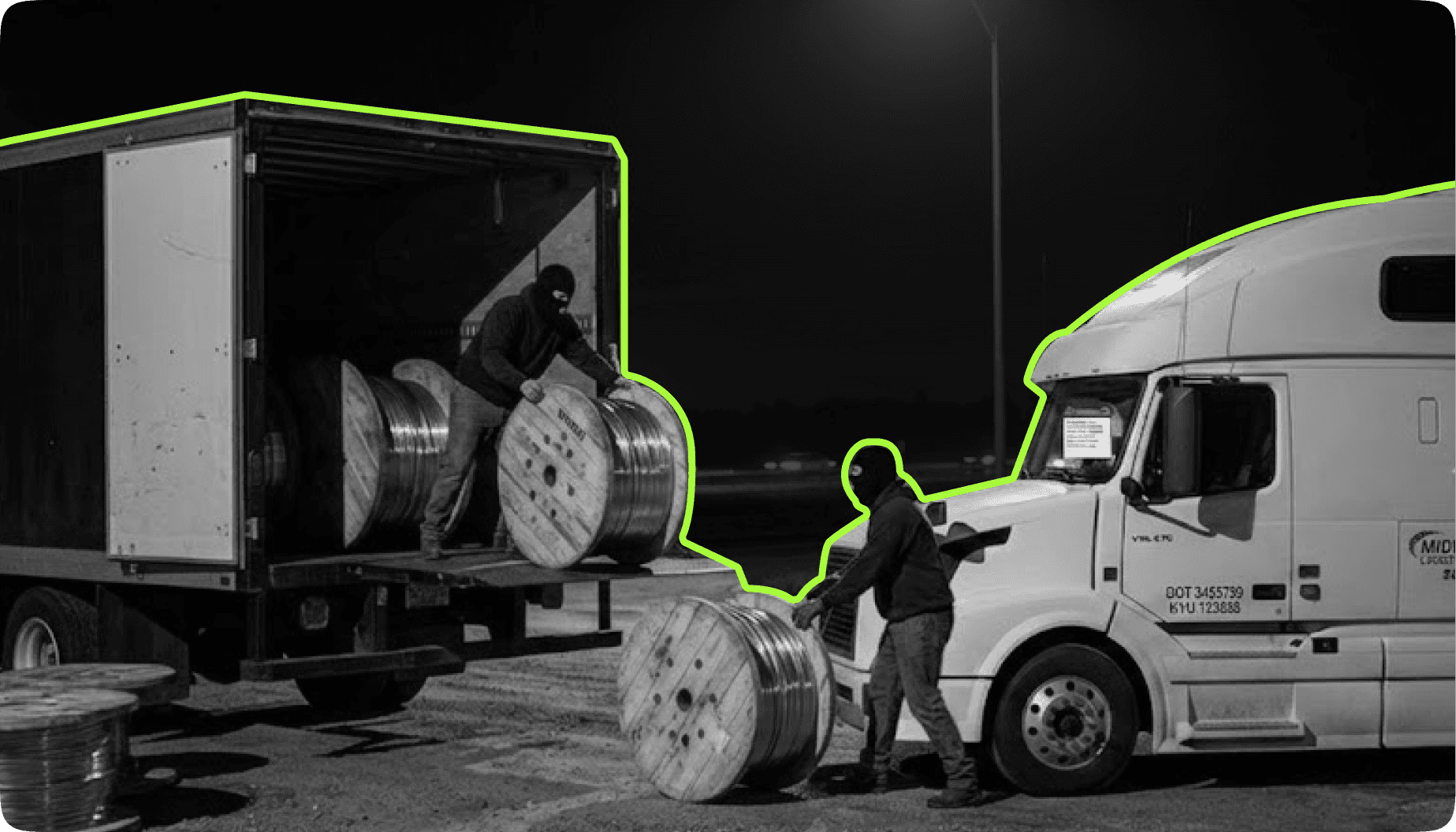
Tactically, the most damaging shift was behavioral. Rather than breaking into parked trailers, sophisticated criminal networks moved to post-tender interception — exploiting the window after a shipment is assigned to a legitimate carrier but before physical pickup. The method:
Research the specific brokerage, assigned carrier, and named contacts for a targeted load
Impersonate those parties to redirect drivers or dispatch contacts to fraudulent delivery locations
Complete the theft before the shipper realizes anything went wrong
CargoNet also flagged a related vector: organized groups purchasing existing motor carriers with clean safety histories to establish instant credibility on load boards. Every additional broker in your chain multiplies the number of identities criminals can research, clone, or weaponize against you.
What the 2025 Cargo Theft Surge Means for Supply Chain Security in 2026
Physical security measures — locks, seals, GPS units — were built for a different threat model. Against fraud-based interception, they're irrelevant. The attack happens in a phone call or email, not at a truck stop.
What actually reduces exposure:
Verify carriers before assigning loads — DOT, insurance, and safety checks at the front end of every transaction, not after a loss.
Cut the broker chain — each intermediary creates more identity exposure. Direct shipper-to-carrier connections remove the layers criminals use to gather intelligence.
Track the driver, not just the trailer — a GPS ping means nothing if the person behind the wheel isn't your verified carrier.
Update your risk geography — route planning built on 2022 hotspot data is structurally outdated for the 2025 threat landscape.
Review freight fraud red flags and the full cargo theft prevention checklist — organized crime operates at the intersection of both.
Key Takeaways |
|
Your Copper Shipments Are Already on Their Radar HaulerHub connects shippers directly to verified carriers — five-layer compliance screening, live tracking, zero unnecessary handoffs. Close the information gaps organized crime depends on. |
Checkout other blogs


Stay ahead of the supply chain.
Break free from costly and complex systems. Sign up with HaulerHub now and make shipping a breeze.