Metal Cargo Theft Statistics: What Last Year's Record Losses Mean for Your 2026 Supply Chain
Feb 25, 2026
Scroll to explore

TLDR — What the 2025 Data Tells Us Heading Into 2026
Metal theft nearly doubled in a single quarter last year — Q2 2025 saw a 96% year-over-year jump, making it the steepest commodity-specific spike in recent CargoNet history. By the time 2025 closed, full-year metal theft was up 77%, total losses across North America topped $725 million, and the average stolen load was worth $273,990 — up 36% from the year before. Criminal networks didn't stumble into those numbers. They engineered them. Heading into 2026, the same organizations are better resourced and more operationally refined than they were twelve months ago.
The freight industry has been handed the same security playbook for years: track your trucks, park somewhere bright, check your carriers. The advice hasn't changed. The theft numbers have — in the wrong direction. Last year set a record nobody wanted.
The 2025 data from Verisk CargoNet reveals something most freight guides won't tell you: the problem isn't a lack of padlocks. It's a supply chain structure built on broker handoffs, fragmented visibility, and information gaps that organized crime has learned to exploit with financial precision. Metal cargo theft nearly doubled in a single quarter last year — because criminals tracked copper prices the same way commodity traders do and targeted shipments accordingly.
If you're moving metal products in 2026 — copper wire, aluminum components, steel — you are now operating in one of the highest-risk freight categories in North America. This post breaks down what the 2025 cargo theft statistics mean for your operation this year, why the cargo theft threat is getting harder to stop, and what the data demands you change before the next incident is yours.
What Does Last Year's Verisk CargoNet Cargo Theft Data Tell Shippers in 2026?
Verisk CargoNet is the industry's recognized leader in cargo theft prevention and recovery — aggregating incident reports from law enforcement, carriers, shippers, and insurers into the most comprehensive theft database available across the United States and Canada. Their quarterly cargo theft report is the benchmark the industry uses for supply chain risk trends analysis, and the 2025 numbers are ones every shipper needs to understand before building their 2026 security strategy.
Their second quarter 2025 supply chain risk trends analysis recorded 884 supply chain theft events — a 13% increase from Q2 2024 and a 10% climb from the first quarter of 2025. In Q2 alone, losses across the supply chain topped an estimated $128 million. The figure that should be driving your 2026 security decisions: metal theft jumped 96% compared to the same period the prior year, with 53 confirmed incidents in three months — nearly double what that same quarter looked like in 2024.
Metric | Q2 2024 | Q2 2025 | Change |
Total theft events | ~782 | 884 | +13% |
Estimated total losses | ~$113M | $128M+ | +13% |
Metal theft incidents | ~27 | 53 | +96% |
Food and beverage incidents | ~107 | 180 | +68% |
Average shipment theft value | $202,364 | $203,586 | Stable |
Source: Verisk CargoNet Q2 2025 Supply Chain Risk Trends Analysis
Theft activity also accelerated within the quarter itself — up 14.6% in April, 4.4% in May, then jumping 21.9% in June. That month-over-month pattern is not seasonal noise. It is organized crime groups scaling up a strategy that was working, building into the second half of the year.
Key Takeaway
The 2025 numbers aren't a post-mortem — they're an operational manual for what criminal organizations are currently running. The methods that produced last year's 96% surge in metal theft don't get retired when the calendar turns. They get iterated on. The Q2 data was the signal. The full-year picture confirms it became a sustained pattern — one with direct implications for how you budget and build your security strategy this year.
The Q2 data was the signal. The full-year picture confirms it was a trend — and the numbers carry a direct warning for every shipper planning metal freight movements in 2026.
What Does the Full-Year 2025 Cargo Theft Picture Mean for 2026 Planning?
The complete 2025 figures, published by Verisk CargoNet in January 2026, make the scope of last year's problem impossible to minimize. Confirmed theft incidents climbed 18% — from 2,243 to 2,646 across North America. Estimated losses jumped 60%, landing near $725 million for the year. Metal theft finished 77% higher than 2024 levels. And the average value of a stolen load rose 36% to $273,990 — a number that points to deliberate, high-value targeting rather than random opportunism.
Metric | 2024 | 2025 | Change |
Confirmed cargo theft incidents | 2,243 | 2,646 | +18% |
Estimated total losses | ~$455M | $725M | +60% |
Metal theft (full year) | Baseline | +77% | +77% |
Food and beverage theft | Baseline | +47% | +47% |
Average theft value | $202,364 | $273,990 | +36% |
Source: Verisk CargoNet 2025 Annual Analysis, January 2026
One forward-looking flag worth noting: CargoNet has flagged increased scrutiny around CDL enforcement as a variable to watch in 2026. Many sophisticated theft operations gain their foothold by purchasing legitimate motor carriers with established load histories — using real compliance records as cover for fraudulent activity. If enforcement activity reduces the supply of available carriers, criminal enterprises may accelerate their search for others to acquire, meaning the fraud infrastructure behind last year's losses isn't contracting. It's finding new ways in.
Key Takeaway
Cargo theft losses nearly doubled between 2023 and 2025. The criminals profiting most are those exploiting supply chains with too many intermediaries and too little end-to-end visibility — a description that fits most shipper networks operating today.
The scale of last year's losses tells you the stakes. But to actually protect your 2026 shipments, you need to understand why metals became the fastest-growing theft target — and what it reveals about how these operations think, plan, and move.
Why Did Organized Crime Groups Make Metal Their Top Cargo Theft Target?
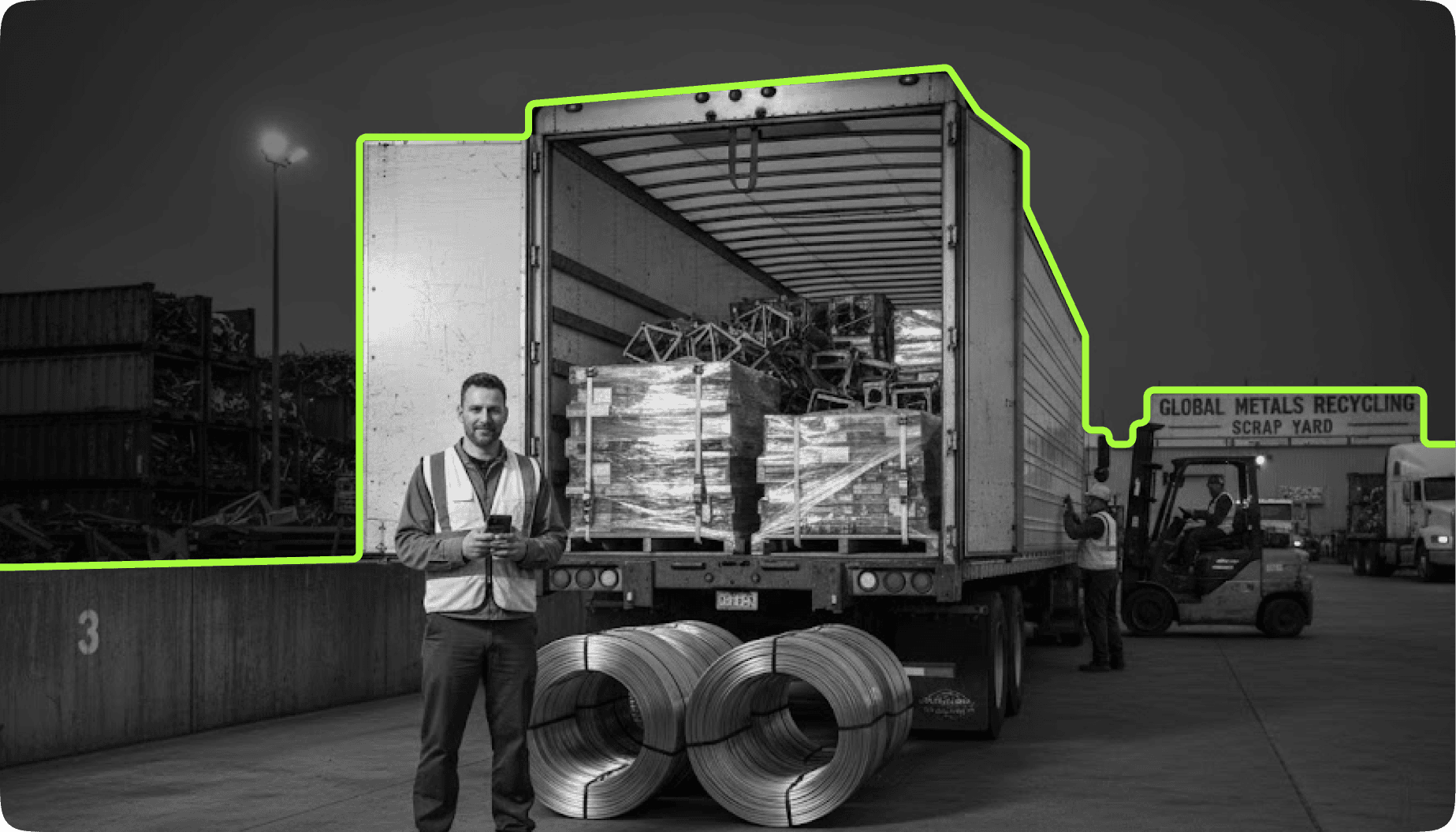
Last year's near-doubling of metal theft incidents wasn't random. The connection to copper commodity prices trading at or near record highs throughout 2025 is direct — and CargoNet's own analysis makes it explicit. According to Keith Lewis, VP of Operations at Verisk CargoNet, criminal organizations calibrate their targets around market value, not opportunity. They track what a commodity is worth on the secondary market the same way a trader tracks spot prices — and they allocate resources accordingly. What looked like a theft wave was really a business decision.
What makes metal shipments particularly exposed going into 2026:
Immediate liquidity: Copper wire and aluminum components move through scrap dealer networks faster than law enforcement can respond. No serial numbers, no manufacturer database — stolen metal disappears into secondary markets with virtually no traceability.
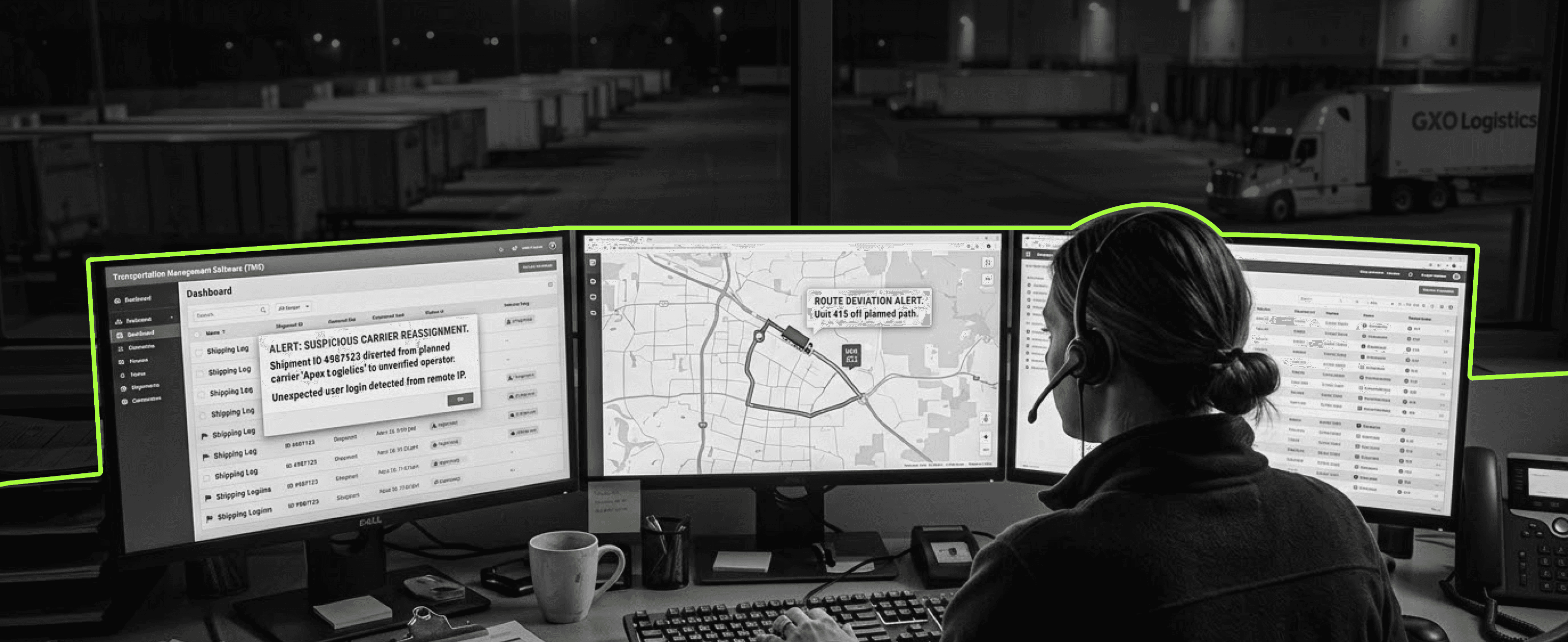
Broker network blind spots: Every handoff between shipper, broker, and carrier creates an information gap. Cargo thieves insert fraudulent pickups into those gaps — a shell company with stolen MC numbers arrives with convincing paperwork before anyone confirms identity.
Theft by deception over straight theft: Complex cargo theft schemes involving document fraud and identity theft are now the dominant attack method. A thief holding a forged bill of lading walks past every physical security measure you've deployed.
2026 tariff-driven price volatility: Trade policy is pushing metal commodity prices higher this year. Higher prices mean higher theft value per load — and the 2025 data confirms criminal networks shift targeting as market conditions move.
CargoNet expects these cargo theft schemes to become more prevalent throughout 2026, as criminal networks refine their social engineering techniques and mine publicly available load board data to identify high-value targets before a shipment moves.
Key Takeaway
In 2026, cargo thieves target your documentation before they target your trailer. Every broker handoff is a potential entry point. Every re-brokered load is an information gap. Modern cargo theft prevention has to start with network structure — not hardware.
Understanding how the attack works is essential. So is knowing where theft activity is concentrated right now — because the geographic risk map shifted significantly last year and those patterns are carrying directly into 2026.
Where Is Cargo Theft Activity Concentrated — And Which Routes Carry the Most Risk in 2026?
The 2025 full-year CargoNet data shows geographic shifts that should directly inform 2026 route planning and carrier selection. California and Texas historically led theft statistics and continued rising at 11% and 12% respectively. The more significant development was the explosive growth in the NYC metro corridor — New Jersey theft incidents climbed 110% last year and Pennsylvania rose 33%, with CargoNet identifying the region as both a primary theft location and a destination for stolen goods.
Region | 2025 YoY Change | Primary Targets |
New Jersey | +110% | Metals, food & beverage, electronics |
Pennsylvania | +33% | Consumer goods, metals |
Indiana | +30% | Vehicle components, metals |
California | +11% | All categories |
Texas | +12% | All categories |
Source: Verisk CargoNet Q3 2025 Analysis & 2025 Annual Report
Indiana saw a notable concentration of theft targeting engines and components bound for domestic vehicle assembly plants — adding industrial metals to the risk picture beyond copper and wire products. Food and beverage products saw a 47% annual spike alongside the metal surge, which signals that organized crime groups are running diversified commodity portfolios rather than concentrating on a single freight category.
The geographic data tells you where to be most vigilant in 2026. The next section tells you what to actually change in your logistics operation to reduce your exposure — starting now, not at the next security review.
How Should Shippers Build a Stronger Cargo Theft Prevention Strategy for 2026?
The standard cargo theft prevention checklist was written for a different era of theft. GPS trackers and parking lot cameras address straight theft — the smash-and-grab variety that now represents a shrinking share of incidents. Today's cargo theft activity runs through documentation fraud, identity impersonation, and the information gaps built into broker-dependent supply chains. Updating your security posture for 2026 means addressing structural vulnerabilities, not adding hardware to a broken model.
According to FreightWaves' analysis of escalating cargo crime, the surge in strategic cargo theft correlates directly with supply chain fragmentation — more intermediaries means more entry points for criminals impersonating legitimate carriers. The fix isn't a new device. It's fewer handoffs and verified connections from origin to destination.
The highest-impact changes for 2026:
Verify carrier identity on every load, not just at onboarding. Cargo theft schemes depend on the assumption that shippers stop checking after initial vetting. Continuous verification at pickup closes that window entirely.
Eliminate re-brokering. Every additional handoff in your supply chain is another moment where your shipment passes through hands you haven't verified. Every additional handoff is another opportunity for an unverified actor to enter the picture.
Replace paper BOLs with digital documentation. Paper bills of lading are a primary attack vector for fictitious pickup schemes. Digital systems create tamper-proof records that cannot be forged at a loading dock.
Require direct GPS visibility — not broker-relayed updates. Real cargo security means knowing exactly which driver and vehicle has your freight at every mile, not receiving a third-party update that may itself reflect a compromised information chain.
Build direct carrier relationships. Shippers who connect directly with verified carriers remove the broker layer where most information gaps — and most theft opportunities — exist.
ITF Group's carrier compliance approach through HaulerHub applies a five-layer carrier verification system — DOT verification, insurance validation, safety ratings, business legitimacy checks, and driver background screening — before any carrier touches a load. Every additional handoff is another moment where your shipment passes through hands you haven't verified. Last year's losses didn't reach $725 million because shippers got unlucky. They reached that number because the broker model creates the exact conditions — fragmented information, unverified actors, delayed visibility — that organized theft operations are built to exploit.
For a detailed look at the warning signs that appear before a theft occurs, see HaulerHub's guide to transportation fraud red flags — the patterns present before most strategic cargo theft incidents that shippers can learn to recognize before a loss occurs.
Key Takeaway
Reducing cargo theft in 2026 is not a technology problem — it is a network structure problem. Direct connections with verified carriers eliminate the handoffs that organized crime depends on. Security is not a feature you layer on top of a broken model. It is what happens when you fix the model.
Last Year's $725 Million in Losses Is a 2026 Warning.
HaulerHub connects shippers directly with five-layer verified carriers — real-time tracking, zero re-brokering, full transparency on every load. See how ITF Group eliminates the handoffs organized crime depends on.
FAQ
Q1. What are the most important metal cargo theft statistics from 2025?
Metal theft climbed 96% year-over-year in Q2 2025 and finished the full year up 77%, according to Verisk CargoNet. Total cargo theft losses across North America reached an estimated $725 million in 2025, with the average stolen load valued at $273,990 — a 36% increase over 2024. Copper products were the primary driver, tied directly to record commodity prices throughout the year.
Q2. Why did metal cargo theft surge so dramatically in 2025?
Criminal organizations calibrate their freight targets around commodity market values, not random opportunity. With copper prices at or near record highs throughout 2025, metals offered the highest return per stolen load of any freight category — and organized crime groups shifted resources accordingly. Scrap dealer networks also make metals among the hardest stolen goods to trace or recover.
Q3. What is strategic cargo theft and why is it harder to stop in 2026?
Strategic cargo theft uses fraud and deception — identity theft, forged documents, stolen MC numbers, and fictitious pickups — rather than physical force. A criminal organization creates a shell company using stolen carrier credentials, researches high-value shipments on load boards, and intercepts freight legally before anyone verifies the carrier's legitimacy. Traditional physical security measures have no effect on a threat that operates entirely through paperwork.
Q4. Which regions have the highest cargo theft risk in 2026?
Based on 2025 CargoNet data, the NYC metro area — particularly New Jersey (+110%) and Pennsylvania (+33%) — saw the sharpest year-over-year increases. California and Texas remain persistently high-risk. Indiana (+30%) emerged as a significant hotspot driven by theft targeting vehicle components and metals.
Q5. How can shippers reduce cargo theft risk in 2026?
The most effective approach combines verified direct carrier connections, elimination of re-brokering, digital bill of lading systems, and real-time shipment tracking tied to a specific verified driver. Reducing handoffs removes the information gaps that organized crime groups exploited to generate $725 million in losses last year. Cargo security in 2026 starts with supply chain structure, not security hardware.
Checkout other blogs

Stay ahead of the supply chain.
Break free from costly and complex systems. Sign up with HaulerHub now and make shipping a breeze.