Freight Fraud on Load Boards: Common Scams, Red Flags, and Prevention
Jan 28, 2026
Scroll to explore

TLDR: What You Need to Know
Fraudulent freight activity increased 27% in 2024, with load board fraud costing the industry $35 billion annually
Criminals exploit load board platforms through identity theft, double-brokering, and email phishing to steal shipments
Brokers and carriers face payment disputes, cargo loss, and reputational damage from load board scams
Verification alone can't solve structural platform vulnerabilities—direct carrier connections eliminate fraud vectors
Fraudulent freight activity increased 27% in 2024, with criminals stealing an estimated $35 billion in cargo annually. Load boards—the digital marketplaces connecting brokers and carriers—have become the primary hunting ground for organized fraud rings using identity theft, double-brokering, and email phishing to intercept legitimate loads. What started as handwritten notes on truck stop bulletin boards in the 1970s has evolved into sophisticated criminal infrastructure, where bad actors exploit platform anonymity to impersonate carriers, hijack shipments, and disappear before anyone realizes the freight is gone.
Shippers face operational disruptions, mounting insurance costs, and eroding customer trust when fraud strikes. Carriers complete the delivery only to discover payment will never arrive. For brokers, it's paying twice—once to the scammer, once to the legitimate trucker who actually moved the load. Freight fraud isn't just a financial problem; it's a trust crisis that cascades through every supply chain touchpoint.
This guide explains how criminals compromise load board platforms to steal shipments, the most common types of freight fraud targeting brokers and carriers, the red flags every shipper should vet before booking, and why proactive fraud prevention requires more than verification tools—it requires rethinking freight infrastructure entirely.
What Is Load Board Fraud and Why Are Freight Brokers and Carriers Being Targeted?
Load board fraud occurs when criminals exploit digital freight marketplaces to steal cargo, intercept payments, or manipulate transactions between shippers, brokers, and carriers. Unlike traditional cargo theft where trucks are hijacked at gunpoint, modern freight fraud happens through compromised accounts, fake identities, and spoofed communications on the platforms designed to make freight more efficient.
The numbers tell the crisis story: Truckstop reported fraud jumped 130% in 2023, from 945 incidents in 2022 to 2,178 cases. That's just one load board platform. Across the industry, the Transportation Intermediaries Association estimates freight fraud costs between $500-700 million annually, with the National Insurance Crime Bureau placing total cargo theft losses—including load board scams—at $35 billion when factoring indirect costs.
Why brokers and carriers make perfect targets:
Transaction volume masks fraud - Thousands of daily loads create cover for fake postings
Speed pressure overrides verification - Competitive spot market rewards fast booking over thorough vetting
Platform anonymity - Digital interfaces hide identity red flags visible in face-to-face transactions
Jurisdictional complexity - Interstate freight crimes cross multiple law enforcement territories
How Scammers and Bad Actors Infiltrate Load Boards to Steal Shipments
Criminals don't hack load boards—they exploit how the platforms work. Here's how freight fraud schemes actually operate:
Email Compromise & Phishing
Scammers send phishing emails mimicking DAT, Truckstop, or legitimate brokerages to steal login credentials. Once inside an account, they monitor rate confirmations, intercept load information, and book shipments under stolen identities. In Q1 2025 alone, CarrierWatch detected 352,134 fraudulent inbound emails targeting freight professionals.
Identity Theft & MC Number Hijacking
Fraudsters purchase old MC numbers from retired carriers or steal credentials from legitimate trucking companies. They update contact information with FMCSA, reroute communications, and book high-paying loads before anyone realizes the motor carrier has been compromised. The FBI estimates 406 unauthorized FMCSA contact changes occurred in Q1 2025 alone.
Spoofed Phone Numbers & Fake Websites
Criminals create websites and phone numbers nearly identical to legitimate carriers, changing a single digit or letter to fool verification checks. When brokers call to confirm booking, they reach the fraudster—not the real carrier.
Common Types of Freight Fraud: From Double Brokering to Fraudulent Loads and Identity Theft
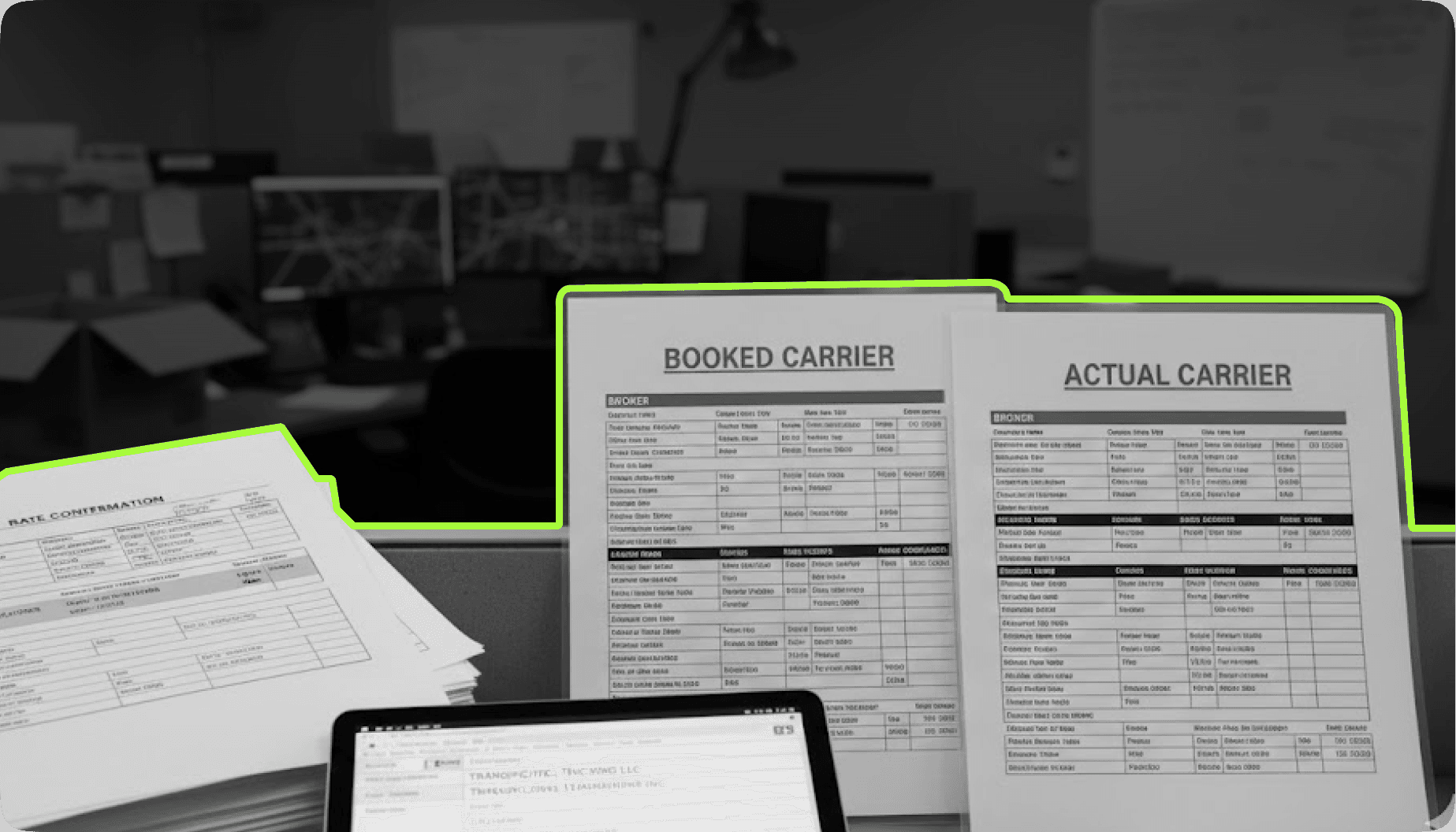
Load board platforms enable multiple fraud schemes, each exploiting different vulnerabilities:
Double-Brokering
A fake carrier accepts a load from a broker, then illegally re-brokers it to a legitimate trucker without authorization. The original broker ends up covering costs twice—once to the fraudster and again to the trucker who actually transported the shipment—while the legitimate carrier goes unpaid. This common form of freight fraud increased 400% between 2021-2022.
Fictitious Pickups
Criminals pose as legitimate carriers, pick up cargo with no intention of delivery, and vanish. The shipment gets sold on black markets or stripped for parts. Often combined with identity theft where fraudsters impersonate legitimate carriers to gain shipper trust.
Invoice Fraud & Payment Manipulation
Scammers send fake invoices after compromising email accounts, redirecting legitimate payments to fraudulent bank accounts. Brokers pay thinking they're covering the real carrier, only to discover the actual trucker never received payment.
Fake Load Postings
Fraudulent brokers post non-existent loads to harvest carrier information—banking details, insurance certificates, and credentials that enable future fraud schemes.
Red Flags Every Shipper and Carrier Should Vet Before Booking
Detecting fraud before booking requires vigilance across multiple verification points:
Suspicious Rate Confirmations
Rates significantly above market value on public load boards
Same load reposted at different rates across multiple platforms
Pressure to book immediately without proper verification time
Contact Information Red Flags
Phone numbers don't match FMCSA SAFER database records
Email addresses from free providers (Gmail, Yahoo) instead of business domains
Requests to communicate only via text or messaging apps
Documentation Inconsistencies
Insurance certificates that can't be verified with issuing companies
Bills of lading showing different carrier names than originally contracted
Missing or conflicting load details in confirmation documents
Freight Fraud Prevention: How to Protect Your Business and Avoid Load Board Scams
Effective fraud prevention requires layered verification that goes beyond single-point checks:
Multi-Factor Authentication
Load boards like Truckstop and DAT now require MFA for account access. Enable this immediately on all platforms to prevent credential theft from phishing attacks.
Real-Time Credential Verification
Always verify carrier information directly through FMCSA's SAFER database before booking. Call the number listed in SAFER—not the number provided by the carrier—to confirm legitimacy. Check insurance certificates directly with issuing companies.
Driver Identity Confirmation at Pickup
Require warehouses to verify driver commercial license matches contracted carrier information before releasing cargo. Photograph truck and trailer numbers for audit trails.
Private Carrier Networks
Public load boards create vulnerability through open access. Private networks with pre-vetted carriers eliminate the fraud risk inherent in open marketplaces. Electronic bill of lading systems with real-time tracking provide continuous shipment visibility that catches theft in progress.
Why Proactive Fraud Prevention Requires More Than Verification—It Requires Infrastructure
Here's the uncomfortable truth: verification tools are band-aids on a broken system. Load boards were designed for efficiency, not security. When platforms prioritize transaction speed over identity verification, fraud becomes structural—not incidental.
Every broker handoff creates an information gap. Every anonymous load posting creates a fraud opportunity. Every platform relying on user-submitted credentials trusts data that criminals routinely forge. The fraud epidemic isn't a verification problem—it's an infrastructure problem.
What Actually Eliminates Fraud Vectors:
• Direct shipper-to-carrier connections that eliminate broker handoffs where criminals hide
• Five-layer continuous compliance monitoring (DOT validation, insurance verification, safety ratings, fraud detection, live tracking)
• Pre-vetted private networks where every carrier undergoes rigorous background checks before platform access
• Real-time tracking and direct communication that catch delivery diversions immediately
The freight fraud crisis demands rethinking how freight infrastructure works. Verification can't fix platforms built without security as a foundation.
Key Takeaways
• Load board fraud increased 130% in 2023 with criminals exploiting platform anonymity and transaction speed pressure
• Double-brokering, fictitious pickups, and identity theft cost the industry $500-700 million annually
• Red flags include suspicious rates, mismatched contact information, and inconsistent documentation
• Verification tools alone can't solve structural platform vulnerabilities—direct carrier connections eliminate fraud vectors at the infrastructure level
Protect Your Freight with Verified Direct Connections
The load board fraud crisis won't fix itself through better verification. It requires infrastructure built for security from the ground up. HaulerHub's platform eliminates fraud vectors through five-layer continuous compliance, pre-vetted carrier networks, and direct shipper-to-carrier connections that remove the handoffs where criminals hide. Schedule a Demo to see how direct carrier connections protect your freight.
Checkout other blogs


Stay ahead of the supply chain.
Break free from costly and complex systems. Sign up with HaulerHub now and make shipping a breeze.