How Much Do Freight Brokers Charge? The Complete 2025 Pricing Breakdown Every Shipper Needs to Know
Nov 26, 2025
Scroll to explore
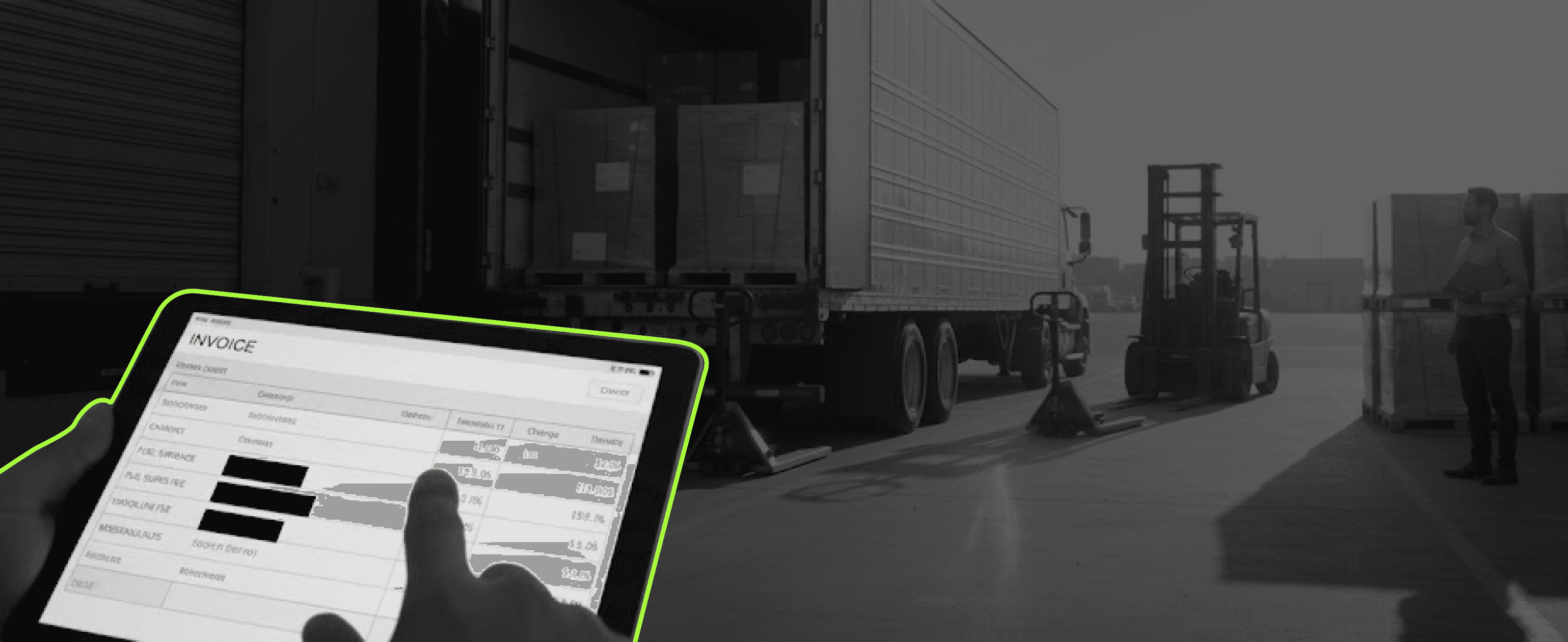
Are you watching your shipping costs spiral out of control while freight brokers pocket the difference? You're not alone. The freight brokerage industry operates on commission structures that most shippers and carriers never fully understand—and that lack of transparency costs businesses billions annually.
Here's what you need to know: when you hire a freight broker to move your cargo, you're not just paying for transportation. A freight broker makes between $150 to $625 per load on average, depending on the shipment value and negotiated rates. But here's the problem—traditional brokers work in ways that hide the real numbers from both shippers and carriers.
The old freight broker business model is broken. Brokers earn their income by taking the difference between what the shipper pays and what the carrier receives. While this creates an inherent conflict of interest, it's become the standard operating procedure in the logistics industry.
Now imagine if you could see exactly where every dollar goes, connecting directly with qualified carriers while cutting out inflated broker margins. That future isn't hypothetical—it's happening right now, and smart shippers are already saving 70% on their freight costs.
TLDR: Freight Broker Pricing at a Glance
Pricing Model | Commission/Fees | Hidden Costs | Transparency | Total Cost on $1,000 Load |
Traditional Broker | 25-30% markup | Accessorial fees, detention, fuel surcharges | Low | $3,300+ |
Digital Broker | 15-20% markup | Some accessorial fees | Medium | $2,200 |
Direct Connection (HaulerHub) | 7% platform fee + $5/load | None - Direct payments | Full | $1,005 |
Key Insight: Traditional freight broker commission typically ranges between 10% and 35%, depending on complexity, route, cargo type, and market conditions.
Now let's break down exactly what you're paying for and explore smarter alternatives that keep more money in your business.
How Much Does a Freight Broker Make Per Load? Understanding the True Cost
Understanding how much does a freight broker earn per transaction reveals the first layer of pricing complexity. A freight broker makes between $150 to $625 per load on average, but this figure only tells part of the story.
When you look at what the freight broker makes per shipment, you're seeing the difference between what shippers pay and what the carrier receives. On a typical $3,000 load where the broker pays the carrier $2,250, that freight broker make per load is $750—a 25% markup that comes directly from your budget.
The challenge? Most businesses don't know these numbers exist until they dig deeper. Traditional brokers aren't required to disclose their margins upfront, leaving shippers in the dark about true transportation costs.
🔑 Key Takeaway: The average freight broker earnings from commission alone can reach $66,000-$90,000 annually, with experienced brokers earning over $200,000—all funded by markups on your shipments.
But commission is just the starting point. Let's explore how freight brokers set their own rates and what that means for your bottom line.
How Freight Brokers Set Their Own Rates: The Commission Structure Explained
Understanding how brokers set their own rates reveals why the current system needs disruption. W-2 brokers typically earn a base salary with a commission directly tied to their profits, with median pay around $40,000 base salary plus an average commission rate of 13.2% on gross profits.
But here's where it gets complicated. Brokers price their services based on three primary models:
Percentage-Based Commission: The most common structure where freight broker rates range from 15% to 30% of total shipment costs. On a $3,000 load, that's $450 to $900 straight off the top.
Flat Fee Per Load: Some freight brokers charge a predetermined amount per load regardless of value, typically ranging from $100 to $500 depending on complexity.
Hybrid Models: Combining base rates with percentage markups, particularly common among independent freight brokers who must cover their own operating costs.
The challenge? Most shippers never know which model their broker uses, making it impossible to evaluate if they're getting fair pricing. A broker may switch between models based on what maximizes their margin on each transaction.
Understanding commission structures is important, but the real shock comes when you see what brokers earn on every single shipment.
Freight Broker Commission: What Brokers Earn on Every Shipment
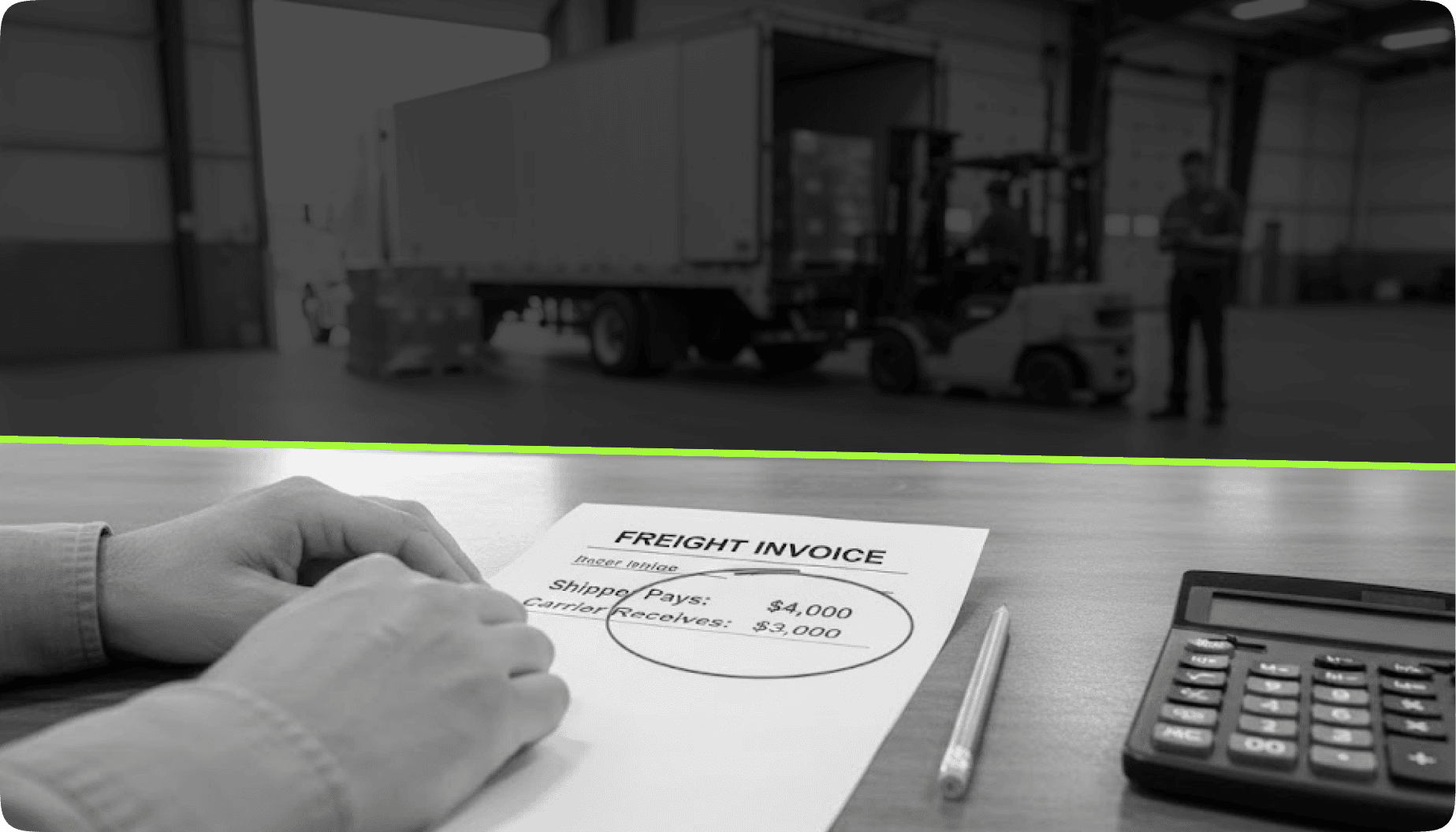
Let's break down the math with real numbers. When you learn how much freight brokers actually take home, the picture becomes clearer—and more concerning.
Commission rates usually range between 15% and 18% of the gross margin. Here's a practical example:
Real-World Scenario:
Shipper pays broker: $4,000
Broker pays carrier: $3,000
Gross margin: $1,000
Broker commission at 15%: $150
Total broker take: $1,000 (25% of shipper payment)
The average salary for a freight broker in 2024 is estimated to be $66,677 per year, but experienced brokers handling high-volume accounts can earn well over $200,000 annually. That money comes directly from markups on your shipments.
Here's what most shippers don't realize: freight broker commission applies to every load, every time. If you ship 100 loads per year at $3,000 each with 25% broker margins, you're paying $75,000 annually just in brokerage fees.
🔑 Key Takeaway: Much freight brokers make per transaction often exceeds 25% of total freight costs—money that could stay in your business or improve carrier compensation.
Commission is just one piece of the puzzle. Hidden costs and accessorial fees add another 20% to your final bill.
Factors That Influence Freight Broker Rates and How Carriers Get Paid
What determines freight broker earnings and pricing? Multiple factors that influence freight pricing create wide variations in costs:
Market Demand: Freight broker rates typically rise during the holiday season when shipping demand spikes, sometimes increasing by 30-40% over baseline rates.
Lane Complexity: Specialized routes, remote destinations, or areas with low carrier density justify a higher commission—or so brokers claim.
Type of Cargo: Hazardous materials require DOT certification and specific handling, adding accessorial charges for additional tasks, responsibilities, and risks.
Current Fuel Costs: Fuel surcharges are determined by the weekly National U.S. Average on Highway Diesel Fuel Price report, often adding 15-25% to base rates.
Current Market Conditions: In a soft market with lot of competition among carriers, brokers can negotiate rock-bottom carrier rates while maintaining high shipper pricing—maximizing their margins.
Meanwhile, carriers face their own challenges. A staggering 20% of total freight costs can be attributed to extra charges and unexpected accessorial fees, which brokers may or may not disclose upfront. When carriers don't get paid fairly, the entire supply chain suffers from reduced capacity and reliability issues.
But commission and market factors only scratch the surface of what freight brokers charge. Let's examine the licensing and bonding costs they pass along to you.
Freight Broker Authority Cost, Surety Bond, and Hidden Operating Expenses
Before anyone can become a freight broker, they must navigate regulatory requirements set by the Federal Motor Carrier Safety Administration (FMCSA). These costs of becoming a freight broker include:
Freight Broker License: Every applicant must submit a $300 non-refundable fee as part of their application to obtain freight broker authority from the FMCSA.
Surety Bond Requirements: The BMC-84 freight broker bond protects carriers and shippers, with premiums typically ranging from $1,500 to $7,500 annually depending on the broker's financial strength.
Technology and Insurance: Licensed freight brokerage operations require transportation management systems, liability insurance, load board subscriptions, and back-office infrastructure—costs that get rolled into your rates.
Freight Broker Training: Professional certification and ongoing education can cost $2,000-$5,000 initially, plus continuing education expenses.
These freight broker authority cost factors help brokers justify their margins. But here's the reality: many of these expenses are one-time or annual costs spread across thousands of shipments, yet brokers price as if they apply to every single load.
Understanding the operating costs reveals how licensed freight brokerage companies structure their business to make a profit.
How Licensed Freight Brokerage Companies Make a Profit on Your Cargo
The freight brokerage industry operates on volume and margin optimization. Freight brokers typically earn from $50,000–$100,000 annually for agents, while brokerage owners keep 100% of company profits after expenses.
Here's how they make a profit:
Volume Play: Handle thousands of shipments annually at 15-25% margins
Accessorial Markups: Most successful brokers apply a 15-25% markup when passing accessorial charges to shippers
Information Asymmetry: Brokers know what shippers pay and what carriers need, profiting from the gap
Market Inefficiencies: Brokers can negotiate lower carrier rates while maintaining high shipper pricing
The business structure favors the broker: they control the information flow between shippers and carriers, making it nearly impossible for either party to verify if they're getting fair pricing. A broker means you're paying someone else to control your supply chain management decisions.
Understanding how brokers work reveals why the traditional model needs transformation.
How Freight Brokers Work: The Traditional Model vs. Modern Digital Platforms
Traditional freight brokers act as intermediaries connecting shippers with carriers through manual processes:
Shipper requests quote
Broker manually searches for available carriers on load board platforms
Broker negotiates rates with multiple options
Broker adds margin and presents quote to shipper
If accepted, brokers manage logistics and documentation
This system worked in the pre-digital era when information was scarce. Brokers use their networks and market knowledge to match supply with demand—valuable transportation services that command premium pricing.
But today, technology enables direct connections that eliminate unnecessary middlemen. Modern platforms automate carrier matching, compliance verification, and payment processing—functions that brokers traditionally charged 25-30% to perform.
The Evolution: Digital brokerages still charge 15-20% commissions—better than traditional, but far from optimal. The next generation eliminates broker margins entirely by connecting shippers and carriers directly while providing the technology and security both parties need.
But do you really need expensive brokers when technology can deliver the same results?
Freight Broker Training and What Brokers Get From Years of Industry Experience

Freight broker training typically costs $2,000-$5,000 and covers load board optimization, carrier vetting, negotiation tactics, and regulatory compliance. Experienced brokers bring value through:
Established motor carrier networks built over years
Market knowledge for rate benchmarking across lanes
Crisis management during shipment disruptions
Understanding expedited shipping requirements and specialized handling
These skills help brokers earn more money and justify premium rates. The trucking industry values expertise, and seasoned professionals deserve compensation for their knowledge.
But here's the question: Do you need to pay 25-30% margins for expertise that technology can now replicate at a fraction of the cost? Advanced platforms offer many of the same benefits—carrier vetting, compliance checking, network effects—without the markup. The logistics industry is evolving beyond manual processes.
Let's explore how technology is cutting shipment costs by 70% or more.
Breaking Free from Traditional Brokerage: Technology-Driven Pricing That Cuts Costs by 70%
The freight industry is experiencing a technological revolution. Smart shippers are moving beyond traditional brokers and even digital brokerages to platforms that offer true transparency and eliminate the types of freight markup that drain budgets.
HaulerHub's Revolutionary Model:
7% platform fee to haulers only
$5 per load shipper pricing
Zero hidden markups – shippers pay carriers directly
Full transparency on every transaction
Real-time tracking and automated compliance
Direct carrier connections that help both parties earn more money
Cost Comparison on $1,000 Base Freight:
Traditional 3PL: $3,300 total (230% markup with fees)
HaulerHub Digital: $1,005 total (70% savings)
By eliminating the broker middleman and leveraging technology for carrier matching, compliance verification, and payment processing, modern platforms deliver superior supply chain management at a lower cost than traditional brokerage.
🔑 Key Takeaway: The shipping costs you manage don't need 25-30% broker margins. Technology now handles what brokers price manually for, at a fraction of the cost—helping you save money on shipping while ensuring carriers and shippers both benefit.
Take Control of Your Freight Costs Today
Now you understand how much do freight brokers make, why freight brokers set premium rates that drain your budget, and how the traditional new business model no longer serves modern logistics needs.
The question isn't whether freight brokers must adapt—it's whether you can afford to keep paying inflated rates when superior alternatives exist. When you look at what brokers get versus what technology delivers, the choice becomes clear. Freight brokers play an important role in connecting shippers with carriers, but their pricing model belongs to a pre-digital era.
The average freight broker commission of 15-25% made sense when information was scarce and manual processes were necessary. Today, neither justification holds. Freight brokers aren't going away, but smart businesses are choosing direct connections that keep more money in their operations while ensuring carriers get paid fairly.
Ready to slash your transportation services costs by 70%?
HaulerHub revolutionizes how shippers and carriers connect, eliminating broker markups while providing enterprise-grade technology, compliance management, and real-time visibility. Our platform demonstrates that connecting shippers with carriers doesn't require expensive intermediaries—just smart technology and transparent pricing. Brokers manage complexity; we eliminate it.
Start Saving on Every Shipment →
Join thousands of shippers who've discovered that the best way to lower cost isn't negotiating better broker rates—it's choosing direct connections. Stop letting freight brokers use outdated models to justify premium pricing. The future of the freight brokerage industry is transparent, technology-driven, and designed to help you keep more of your hard-earned revenue.
Checkout other blogs



Stay ahead of the supply chain.
Break free from costly and complex systems. Sign up with HaulerHub now and make shipping a breeze.