How to Report Double Brokering: Your Complete Guide to Filing FMCSA Complaints and Protecting Your Freight
Jan 14, 2026
Scroll to explore

TLDR: What You Need to Know
Double brokering costs the freight industry $500-700 million annually, with complaints up 400% since 2022
File complaints through the FMCSA National Consumer Complaint Database (NCCDB) at nccdb.fmcsa.dot.gov or call 1-888-DOT-SAFT (1-888-368-7238)
Key red flags: mismatched BOL names, unusually high rates, carriers unfamiliar with load details, and generic email addresses
Penalties include fines up to $16,000 per violation, loss of operating authority, and potential criminal charges
Prevention requires continuous carrier verification, direct communication, and technology platforms that eliminate intermediary gaps
The Federal Motor Carrier Safety Administration just modernized their complaint database for the first time in years. The reason? Double brokering has exploded into a $700 million annual crisis, and the old system couldn't keep up.
Here's the problem: 85% of brokers and carriers report being impacted by double brokering. That means if you're moving freight, you've either been hit or you're next. The average company loses over $400,000 to these schemes—and most never see that money again.
But knowing how to report double brokering—and doing it correctly—changes everything. Your complaint becomes part of the broker's permanent record. It helps the FMCSA identify which companies to investigate. And it protects other shippers and carriers from falling victim to the same fraudulent broker.
This guide walks you through exactly how to identify double brokering, effectively report it to federal authorities, and implement the prevention strategies that make these scams structurally impossible.
What Is Double Brokering and Why Is It Illegal?
Double brokering occurs when a broker accepts a load from a shipper and then secretly transfers that shipment to another broker or carrier without the shipper's knowledge. This practice in the freight industry represents a fundamental breach of contract—and in most cases, outright fraud.
Here's how a typical double broker scheme works: A broker posts a load on an online load board. A second broker—often operating with stolen or purchased MC credentials—accepts that load. Instead of hauling it themselves, they re-broker it to an actual carrier at a lower rate, pocket the difference, and disappear before anyone gets paid.
Why is double brokering illegal? FMCSA regulations require transparency in freight transactions. When a broker re-brokers freight without disclosure, they violate federal law governing operating authority. More critically, it creates a liability nightmare: insurance coverage may not apply to the actual carrier hauling the load, leaving all parties involved exposed if something goes wrong.
Double Brokering vs Co-Brokering: Understanding the Difference
Factor | Double Brokering | Co-Brokering |
Shipper Consent | None—happens secretly | Disclosed and agreed upon |
Contract Terms | Violated | Written into agreement |
Insurance Coverage | May be voided | Maintained properly |
Legal Status | Illegal under FMCSA | Legal when documented |
Payment Risk | High—carriers often unpaid | Clear payment chain |
The distinction matters: co-brokering is a legitimate business practice when properly disclosed. Double brokering in the freight industry is fraud—and recognizing the difference is your first line of defense.
Key Takeaway: Double brokering is explicitly prohibited under federal regulations because it creates uninsured loads, untraceable freight, and unpaid carriers. When a broker accepts a load and re-brokers it without authorization, every party in the transaction faces financial and legal risk.
Now that you understand what makes this practice illegal, let's examine the warning signs that help you identify double brokering before it costs you money.
How to Identify Double Brokering Before It's Too Late
Truckstop reported a 400% increase in double brokering scams between late 2022 and early 2023. The Transportation Intermediaries Association now estimates these fraudulent activities affect $500-700 million in freight annually. But here's what the statistics don't tell you: most victims could have spotted the scam before it happened.
When you suspect double brokering, these are the red flags that should trigger immediate verification:
Documentation Red Flags
Mismatched names on the Bill of Lading: If the carrier name on your BOL doesn't match who you originally contracted with, a potential double brokering situation exists
Rate confirmations from different companies: Multiple rate confirmations for the same load signal multiple brokers handling your freight
Inconsistent shipper information: If details about pickup location, delivery schedules, or cargo specs don't match what you provided, the load has likely been passed around
Behavioral Warning Signs
Unusually high rate offers: Fraudulent broker entities often offer above-market rates to attract carriers. If a deal seems too good to be true, dig deeper
Carriers unfamiliar with load details: When the driver picking up your freight doesn't know basic information about the shipment, they likely received it through another broker
Pressure for immediate decisions: Double broker operations rely on speed to prevent verification. Legitimate brokers can wait while you confirm details
Generic email addresses: Gmail, Yahoo, or Hotmail addresses instead of company domains are immediate red flags for carriers and brokers alike
Verification Steps When You Suspect Fraud
Check SAFER: Verify the carrier's MC number through FMCSA's Safety and Fitness Records at safer.fmcsa.dot.gov
Call the verified number: Contact the carrier using the phone number listed in SAFER—not the number provided by the broker
Verify insurance independently: Contact the insurance company directly to confirm coverage is current and valid
Request direct driver contact: A reliable broker should provide direct communication with the assigned driver
Key Takeaway: Double brokering scams follow predictable patterns. The combination of documentation inconsistencies, behavioral red flags, and resistance to verification indicates a possible double brokering incident. Trust your instincts—and verify everything.
Once you've confirmed fraud has occurred, the next step is reporting it to the proper authorities. Here's exactly how to file a complaint with the FMCSA.
How to Report Double Brokering to the FMCSA
In 2025, the Department of Transportation announced a modernized National Consumer Complaint Database specifically designed to address freight scams like double brokering. This upgrade makes it easier than ever to report the incident and ensure bad actors face consequences.
To effectively report double brokering, follow these steps:
Step 1: Gather Your Evidence
Before filing, compile all relevant documentation:
Rate confirmations from the original broker you contracted with
Bills of lading showing mismatched carrier information
Email correspondence and communication records
Payment receipts or proof of non-payment
Screenshots from load boards or platforms showing the transaction
The broker's MC number, USDOT number, and contact information
Step 2: File Online Through the NCCDB
Visit the Federal Motor Carrier Safety Administration's complaint portal at nccdb.fmcsa.dot.gov. The updated system now includes a specific category for property brokers, making it straightforward to file a complaint with the FMCSA about double brokerage incidents.
When filling out the form:
Select "Freight Broker" as the complaint category
Choose "Deceptive Business Practice" or "Operating Authority and Financial Responsibility" as the violation type
Provide detailed descriptions of what happened, including dates and dollar amounts
Upload your supporting documentation
The process typically takes about 15 minutes. Your complaint becomes part of the broker's permanent record.
Step 3: Report to Additional Authorities
For comprehensive protection, also report fraud to:
DOT Office of Inspector General: Call 1-800-424-9071 or online at oig.dot.gov to report significant fraud
FBI Internet Crime Complaint Center: For fraud involving cyber elements like phishing or identity theft
State Attorney General: Many states have transportation fraud divisions
Industry databases: Report to Carrier411 FreightGuard, TIA Watchdog, and any load board platforms where the fraud occurred
Step 4: File a Bond Claim
If you haven't been paid, file a claim against the freight broker's surety bond. FMCSA requires brokers to maintain a $75,000 bond. While recovery from bond claims is often partial, it provides some financial recourse while the investigation proceeds.
Key Takeaway: Filing complaints through the proper channels creates accountability. The FMCSA uses these reports to determine which companies to investigate, and your documentation may be crucial to enforcement action.
So you've filed your complaint. But what actually happens next? Let's examine the investigation process and the penalties for double brokering that violators face.
What Happens After You Report Double Brokering?
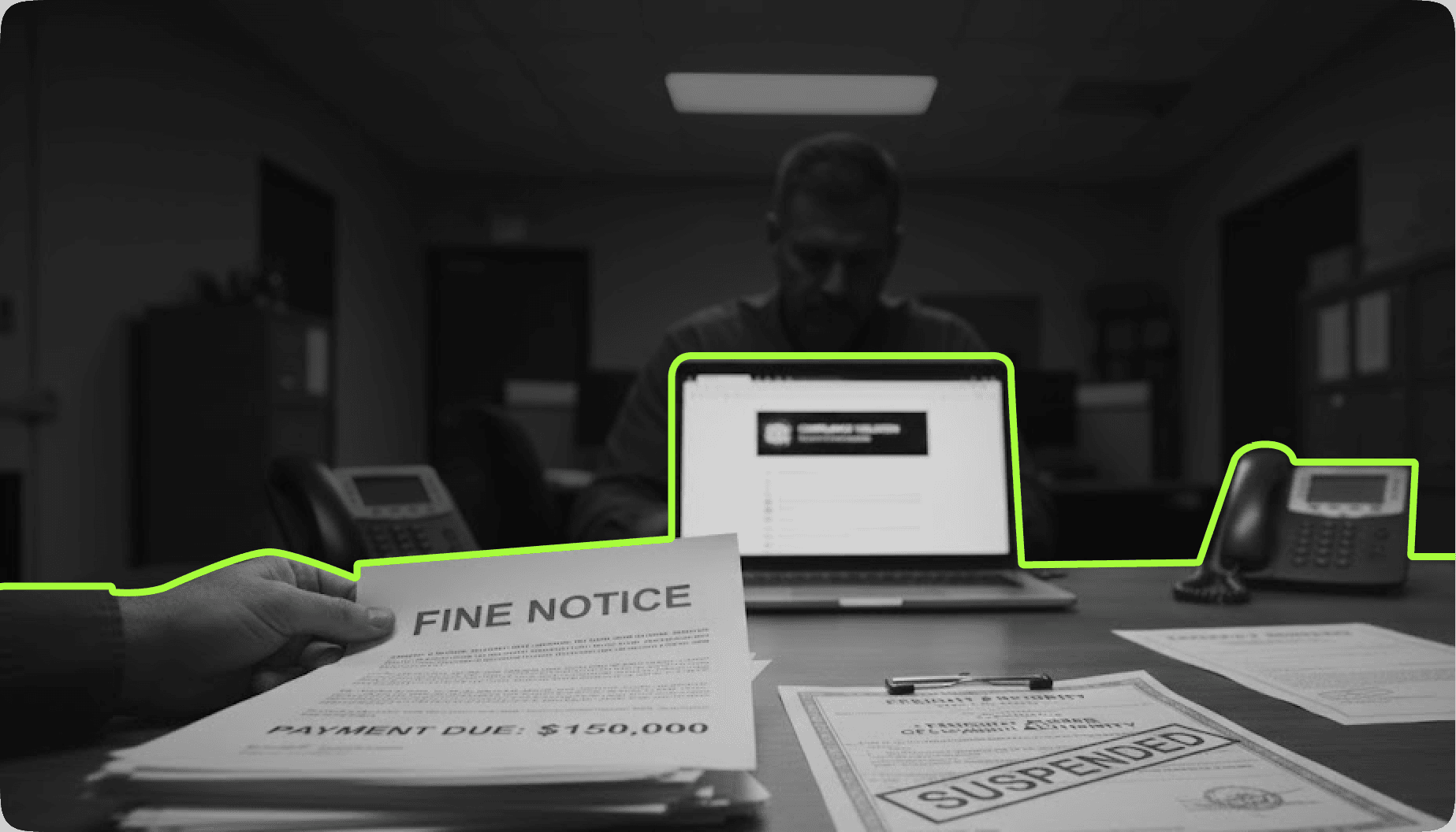
Once you've submitted your complaint, the FMCSA initiates a review process. Understanding what happens next—and the potential penalties for double brokering—helps you set realistic expectations and know when to take additional action.
The Investigation Process
Your complaint enters the FMCSA system and becomes part of the broker or carrier's permanent record. The agency uses complaint data, along with other sources, to determine which companies warrant investigation. If FMCSA decides to take enforcement action, you may be contacted for additional information.
However, there's a limitation to understand: FMCSA's July 2024 report to Congress acknowledged that the agency lacks the statutory authority to administratively assess civil penalties for broker violations. This means FMCSA must seek adjudication through United States District Court for many enforcement actions—a process that takes time.
Penalties for Violations of FMCSA Regulations
Violation Type | Potential Penalty | Additional Consequences |
Operating without authority | Up to $16,000 per violation | Loss of brokerage authority |
Contract violations | Civil liability | Lawsuits from damaged parties |
Fraud or identity theft | Criminal prosecution | Federal prison time |
Bond requirement failure | $10,000+ fines | Revocation of operating rights |
Why Reporting Still Matters
Even with enforcement limitations, your complaint serves critical purposes. It creates a documented pattern that builds cases against repeat offenders. It alerts other brokers and carriers through industry databases. And it contributes to the data FMCSA uses to advocate for stronger regulatory authority.
The Owner-Operator Independent Drivers Association has been pushing for years to give FMCSA more enforcement teeth. Your complaints are part of that effort—they demonstrate the scope of the problem within the industry.
Key Takeaway: While federal enforcement has limitations, reporting creates accountability. Complaints build the record that leads to investigations, license revocations, and industry-wide warnings about specific bad actors.
But the best outcome is never needing to file a complaint in the first place. Let's look at how to prevent double brokering before you fall victim to these schemes.
How to Prevent Double Brokering Before You Need to Report It
When it comes to double brokering, prevention is infinitely more valuable than enforcement. Once your freight has been stolen or your carrier hasn't been paid, recovery is difficult and often incomplete. Smart operators build verification systems that make these schemes structurally impossible.
Due Diligence Checklist: Verify Broker Credentials Before Every Load
Verify operating authority: Check MC and USDOT numbers through SAFER before contracting
Confirm insurance coverage: Contact insurance companies directly—don't rely on certificates alone
Check complaint history: Review Carrier411, TIA Watchdog, and FMCSA complaint records
Verify physical address: A reliable freight brokerage has a verifiable business location
Require contract clauses: Include explicit language prohibiting unauthorized re-brokering
Operational Best Practices to Protect Your Business
Establish direct driver communication: Before pickup, get the driver's direct contact information and verify it matches the contracted carrier
Record vehicle information: Have your warehouse team document tractor and trailer plates, comparing them to contracted equipment
Implement real-time tracking: GPS visibility from pickup to delivery eliminates the blind spots where double brokering thrives
Avoid rate-only decisions: The cheapest option on the freight market is often the one that costs you most. Trustworthy freight partners rarely undercut the market significantly
Red Flags That Should Stop a Transaction
The broker may refuse to provide verifiable references
Payment requests to accounts that don't match the company name
Pressure to book immediately without time for verification
The carrier without proper documentation or resistance to providing ELD records
Multiple companies operating from the same IP address or phone number
Key Takeaway: Prevention requires both one-time vetting AND continuous verification. The freight market changes daily—a carrier that was legitimate last month may have had their credentials compromised today.
Manual prevention works, but it's time-consuming and error-prone. That's why technology platforms have become essential infrastructure for companies serious about protecting their freight.
Why Technology Is the Only Real Solution to Double Brokering
Here's the uncomfortable truth: manual verification can't keep pace with fraud. Criminals are using AI to generate fake documentation, compromising legitimate carrier accounts within minutes, and executing schemes across multiple states simultaneously. The traditional broker model—with its inherent information gaps and handoff points—creates the exact conditions fraud requires.
The Structural Problem
When a shipper works through traditional broker networks, their freight passes through multiple hands. Each handoff creates an opportunity for unauthorized re-brokering. Each broker in the chain adds complexity and reduces visibility. And when something goes wrong—as it does $700 million worth every year—untangling who's responsible becomes nearly impossible.
FreightWaves research shows that 78% of brokers identify fraud as one of the most time-consuming issues in their operations. Another 65% report significant productivity losses due to fraud-related disruptions. The logistics industries are spending enormous resources fighting a problem that technology can eliminate at the source.
What Modern Supply Chain Protection Looks Like
The solution isn't better fraud detection after the fact—it's building systems where fraud can't occur in the first place. That means eliminating the intermediary gaps where double brokering happens and implementing continuous verification that catches credential changes in real-time.
Effective platforms provide:
Real-time carrier verification: Checking credentials against FMCSA databases before every load, not just at onboarding
Continuous insurance monitoring: Automatic alerts when coverage lapses or changes
Direct shipper-carrier connections: Eliminating the intermediary layers where unauthorized re-brokering occurs
GPS tracking with anomaly detection: Identifying route deviations before cargo disappears
Tamper-evident documentation: Digital BOLs that can't be forged or manipulated
The ROI of Prevention
Companies using comprehensive carrier verification platforms report 97% reductions in double brokering incidents. When you compare that to the average $400,000 loss per successful fraud scheme, the math is straightforward: prevention technology pays for itself many times over.
Key Takeaway: The old model is broken. Fragmented broker networks, paper documentation, and one-time verification create the vulnerabilities criminals exploit. Technology platforms that provide continuous verification and direct connections don't just reduce fraud—they make it structurally impossible.
Build the Protection Your Freight Demands
Double brokering thrives in the gaps—between booking and pickup, between one freight broker and another carrier, between what's on paper and what's actually happening with your shipment. Every gap is an opportunity for fraud.
HaulerHub closes these gaps. Five-layer carrier verification that checks credentials before every load. Real-time GPS tracking with anomaly detection. Smart BOL technology that prevents document manipulation. And direct shipper-carrier connections that eliminate the intermediary handoffs where double brokering occurs.
Built by ITF Group—operators who run a $200M freight operation and built the platform they wished existed. We understand one freight fraud scheme can devastate a business, because we've been targets ourselves.
Ready to stop paying the freight fraud tax?
Contact HaulerHub to see how verified direct connections protect your freight.
Checkout other blogs

Stay ahead of the supply chain.
Break free from costly and complex systems. Sign up with HaulerHub now and make shipping a breeze.