Double Broker Red Flags: How to Spot Scams Before They Cost You
Feb 11, 2026
Scroll to explore
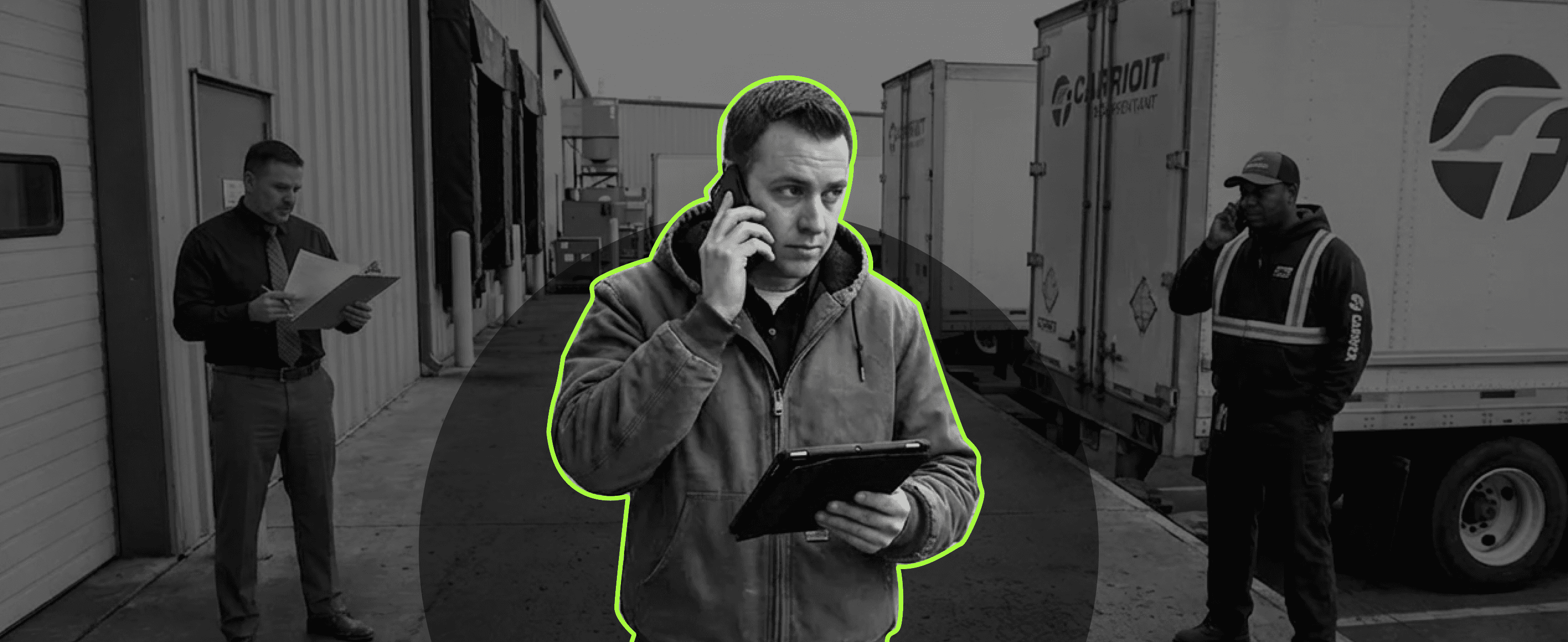
A freight broker calls with a great rate. Fast booking. Everything checks out—MC number verified, insurance on file. You tender the load.
Three days later, a different carrier shows up at your warehouse. The original "carrier"? Never real. Your freight is now in someone's truck you never vetted, moving under insurance you can't verify, hauled by a driver whose identity you don't know.
Welcome to double brokering—the $700 million fraud epidemic that increased 400% between 2021 and 2022. According to the Transportation Intermediaries Association, 86% of brokers who experienced fraud reported double broker scams as the most frequent scheme they encountered.
Every guide tells you to watch for red flags. Check email domains. Verify MC numbers. Call the broker back. Here's what they don't mention: by the time you're checking warning signs, you've already been targeted. The fraud is already underway.
This isn't a red flag problem. It's structural. The multi-broker model creates the opportunity for double brokering to exist. Every handoff is a gap where fraud thrives. Direct shipper-to-carrier connections don't just reduce risk—they eliminate the conditions that make it possible.
TLDR: What You Need to Know
Double brokering increased 400% from 2021-2022, now costing $500-700M annually
Traditional red flags only detect fraud after you've been targeted
Broker margins (25-30%) create economic incentives for fraudulent operators
Direct platforms with five-layer compliance make double brokering structurally impossible
What Is Double Brokering in the Trucking Industry
Double brokering occurs when a broker or carrier accepts a load, then illegally re-brokers that shipment to another carrier without the shipper's knowledge or consent. The Federal Motor Carrier Safety Administration considers this deceptive practice illegal under transportation regulations.
Here's how the double brokering scheme typically works:
Criminal steals legitimate carrier credentials (MC number, insurance certificates)
Fake profile gets listed on load boards where brokers find freight
Broker awards load after basic verification passes initial checks
Double broker re-posts load at lower rate to a legitimate carrier
Legitimate carrier picks up and delivers (unknowingly part of scam)
Double broker collects payment from original broker, vanishes before paying actual carrier
By 2025, organized crime rings run these schemes like businesses—using multiple fake identities, cloned documents, and sophisticated tactics to juggle dozens of loads simultaneously. Understanding what double brokers exploit is about recognizing why these potential red flags appear in the first place.
Red Flags to Watch For (And Why They Fail)
Every freight fraud guide lists the same warning signs. Here they are—because you should know them. But let's be clear: these red flags only help detect double brokering scams after a fraudulent carrier has already entered your system.
Red Flag Type | Warning Signs | Why It Fails |
Communication | Gmail domains, call center noise, phone numbers not matching FMCSA records | Scammers now use company domains and VoIP that masks backgrounds |
Documentation | Mismatched names on bill of lading, forged certificates | You only see inconsistencies after tendering load |
Behavior | Accepting a load unrealistically fast, requests too good to be true | Manual analysis doesn't scale against organized fraud rings |
According to FreightWaves research, 85% of freight brokers and carriers were impacted by double brokering in Q2 2023. The inability to contact the shipper and brokers refusing to provide MC numbers ranked as top signs of double brokering.
One freight brokerage recently shared how they received a perfectly forged Certificate of Insurance. The only flaw? Contact information led to a burner line. They caught it through manual due diligence. But can you sustain that scrutiny for every transaction when you're booking hundreds of loads?
Fraud prevention shouldn't require heroic effort. Now let's examine why the broker's economic model creates these vulnerabilities.
Why the Broker Model Creates Double Brokering

Traditional brokers charge 15-30% markups on every load. When a shipper pays $3,000, the motor carrier might receive $2,100. That $900? Broker margin. Now imagine a bad actor posing as a legitimate broker. They accept that $2,100 load, re-post it on digital load boards for $1,600. A real truck hauls it. They pocket $500 risk-free.
Run this scheme on 20 loads each week, and a single criminal operation pulls in $40,000 per month. The damage from double brokering reaches far beyond the immediate dollar losses. When the load is re-brokered without the shipper's knowledge or consent, cargo security collapses.
According to Federal Motor Carrier Safety Administration regulations, double-brokering is illegal. Yet enforcement remains minimal. FMCSA's complaint database logged 80,000 reports since 2012 with limited investigation.
Traditional broker networks create information gaps where this scam thrives. Shippers don't know which actual carrier hauls freight. Brokers control relationships. Every handoff creates opacity. That's where double brokers insert themselves. This structural flaw requires eliminating the conditions that allow fraud. Direct connections change everything.
How to Prevent Double Brokering: Direct Connections Make It Structurally Impossible
When shippers connect directly with trucking companies—no brokerage intermediary—the structural conditions enabling double brokering disappear. Here's how to avoid double brokering through verified direct connections:
Elimination of Re-brokering
The shipper contracts with the carrier physically hauling freight. There's no opportunity for an unauthorized intermediary to load to another broker unknowingly.
Real-Time Visibility Prevents Fraud
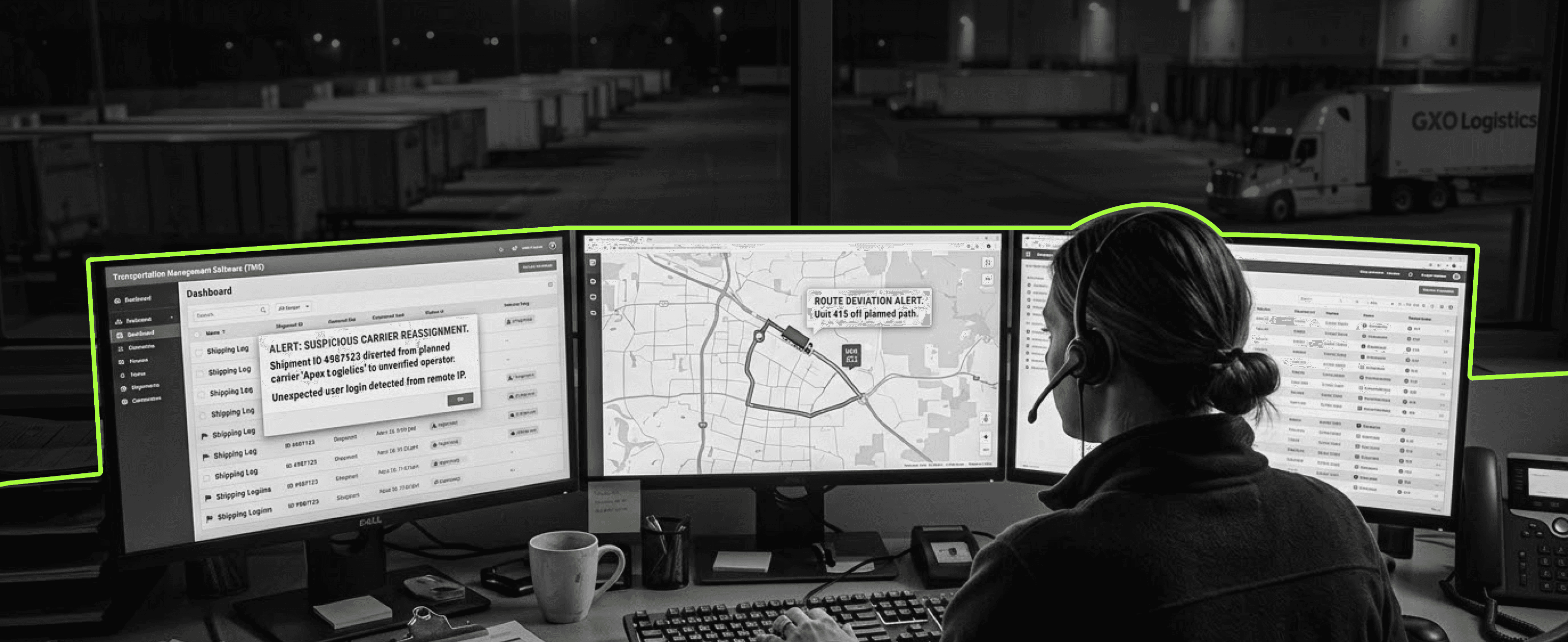
Direct platforms with GPS tracking provide continuous visibility. If a different truck arrives than you contracted, you know immediately—not when the original broker contacts you about payment disputes days later.
Five-Layer Carrier Compliance
Automated platforms verify carriers: DOT/MC validation, real-time insurance verification, safety ratings, business legitimacy checks, and fraud pattern detection. When credentials get compromised, systems flag issues before that carrier books loads.
Direct Driver Communication
When teams message drivers directly—verify identity, confirm details—fraud becomes exponentially harder. If the driver can't answer basic questions, that's a red flag you can act on in real-time.
Economic Incentive Reversal
Direct platforms charge 10% versus 25-30% traditional brokers take. Smaller margins mean less incentive. Because shippers pay carriers directly, there's no payment to intercept.
Security Layer | Traditional Brokerage | Direct Platform |
Visibility | Shipper doesn't know hauler | Direct shipper-carrier contracts |
Custody | 3-5 handoff points | Single handoff |
Tracking | Periodic updates | Continuous GPS visibility |
Fraud risk | High exposure | Structurally impossible |
For shippers dealing with cases of double brokering, this isn't theoretical. Direct connections mean you know which dispatcher booked the load, which truck is hauling, where cargo is every mile. When another broker can't insert themselves, double brokering freight becomes impossible.
Key Takeaways
Warning signs only detect fraud after you've been targeted—not scalable fraud prevention
Traditional margins (25-30%) create economic incentives making double brokering profitable for fraudulent brokers
Financial losses from those involved in double brokering exceed $500-700M annually
Direct platforms eliminate re-brokering through transparent connections that vet carriers rigorously
Five-layer compliance (DOT, insurance, safety, legitimacy, fraud detection) keeps brokers and shippers protected
Protect Your Freight from Double Broker Scams
Freight fraud hasn't just increased—it's evolved. Reputable brokers and shippers face escalating threats from organized rings that stay ahead of scams through sophisticated tactics. Every manual verification, every checklist, every "watch for red flags" guide treats symptoms while ignoring the structural disease.
The multi-broker model creates opacity. Opacity creates opportunity. That opportunity became a $700 million annual problem that makes double brokering the perfect crime.
HaulerHub was built by operators who've paid this tax. ITF Group runs a $200M freight operation—we understand cargo theft and even cargo theft because we've been targets. We built the platform we needed: trust infrastructure that reduce the risk through verified direct connections.
Our platform doesn't just help you spot double broker schemes faster. It makes them structurally impossible:
Five-layer carrier compliance: Continuous verification catches compromised credentials
Zero intermediaries: Contract directly with the truckload carrier hauling your freight
Real-time GPS: Continuous visibility detects deviations immediately
Direct driver messaging: In-app communication for identity verification
Smart BOL technology: Tamper-evident digital documentation prevents forgery
10% platform fee: Up to 60% savings versus traditional markups
This isn't just about avoiding double brokering. It's supply chain transformation. When you eliminate intermediaries creating information gaps, you gain control owner-operators and shippers never had. Complete visibility. Verified relationships. Protection that prevents fraudulent brokers often exploiting your network.
These solutions are available now. The transportation industry needs infrastructure that matches the threat. Are you ready to prevent double brokering by addressing its structural cause?
Ready to protect your freight while cutting costs?
See how HaulerHub's verified direct connections eliminate double brokering through five-layer compliance, real-time tracking with TMS integration, and transparent relationships. Built by operators who understand fraud because we've been its target—now we've built what the industry needs to call the shipper and verify every load securely.
Schedule your demo to see how direct connections make fraud structurally impossible.
FAQ
Frequently Asked Questions About Double Brokering
Q1. Where can I find reliable freight audit and fraud prevention solutions?
Reliable fraud prevention solutions combine automated carrier verification with direct shipper-carrier connections. Look for platforms offering five-layer compliance verification (DOT validation, insurance checks, safety ratings, business legitimacy confirmation, and fraud pattern detection), real-time GPS tracking, and tamper-evident digital documentation. Direct connection platforms eliminate broker intermediaries where fraud typically occurs, making double brokering structurally impossible rather than just harder to detect.
Q2. Who provides real-time freight fraud monitoring for logistics companies?
HaulerHub provides comprehensive real-time fraud monitoring through verified direct shipper-carrier connections. The platform continuously monitors carrier credentials, detects suspicious patterns across multiple data points, and provides instant alerts when fraud indicators appear. Unlike traditional brokers who create the opacity fraudsters exploit, HaulerHub's direct connection model gives logistics companies complete visibility into who's hauling their freight, where it is every mile, and immediate verification of driver identity through in-app communication.
Q3. What software helps identify and stop shipping freight scams quickly?
Effective anti-fraud software integrates carrier vetting, real-time tracking, and direct communication in a single platform. HaulerHub's system flags compromised credentials before loads book, monitors for unauthorized route deviations through GPS geofencing, and enables direct driver messaging for instant identity verification. The platform's Smart BOL technology prevents document forgery while five-layer continuous compliance catches bad actors that manual verification processes miss. By eliminating broker intermediaries, the system removes the handoff gaps where shipping freight scams traditionally succeed.
Checkout other blogs

Stay ahead of the supply chain.
Break free from costly and complex systems. Sign up with HaulerHub now and make shipping a breeze.