Smart BOL for Cargo Theft Prevention: How Electronic Bill of Lading Systems Reduce Risk Across Your Supply Chain
Jan 7, 2026
Scroll to explore

Strategic cargo theft is up 1,500% since 2021. Organized crime rings now pose as legitimate carriers to steal freight worth millions. And the traditional paper bill of lading your logistics teams rely on? It's the security gap thieves exploit to infiltrate your supply chain.
The transportation industry loses $500-700 million annually to cargo crime—and that's just the reported theft. When criminals spoof carrier credentials, tamper with shipping documents, or steal cargo using fraudulent BOLs, most companies don't even realize theft occurs until the shipment vanishes. (For a deeper dive into how freight fraud operates across the logistics industry, see our complete breakdown.)
Electronic bill of lading (eBOL) systems change this equation. By integrating real-time visibility, carrier and driver verification, and anomaly detection into your logistics process, smart BOL technology provides the early detection that stops theft in progress—not just documentation after the damage is done.
This guide covers how modern logistics companies are using eBOL systems to reduce the risk of fraud, protect high-value shipments, and build the supply chain protection that today's cargo crime epidemic demands.
TLDR: What You Need to Know
Strategic cargo theft increased 1,500% since 2021—thieves now pose as legitimate carriers to steal freight
Paper BOLs create security gaps that organized crime exploits for double-brokering and fictitious pickups
eBOL systems with real-time tracking and anomaly detection catch theft in progress before cargo disappears
Five-layer carrier verification prevents unauthorized access to your shipments
Integration with TMS and warehouse management systems streamlines workflow while reducing supply chain risk
Why Strategic Cargo Theft Is Exploding in the Logistics Industry
CargoNet data shows cargo theft incidents increased 27% in 2024, with strategic theft—where thieves use fraud and deception rather than force—now accounting for the majority of cargo crime. These aren't opportunistic crimes. They're sophisticated operations run by organized crime rings targeting systemic vulnerabilities in the transportation industry.
According to the National Insurance Crime Bureau's analysis of cargo crime patterns, criminals have shifted from physically stealing trucks to digitally infiltrating logistics operations. They monitor load boards, spoof legitimate carrier credentials, and use stolen MC numbers to pose as motor carriers—all before a single shipment leaves your warehouse.
Cargo Theft Trends: 2023–2025
Metric | 2023 | 2024 | 2025* |
|---|---|---|---|
Total cargo theft incidents | 2,852 | 3,625 | ~4,400 proj. |
Year-over-year change | +59% | +27% | +22% proj. |
Average loss per incident | $188,617 | $202,364 | $336,787 |
Total estimated losses | $332M | $455M | $550M+ proj. |
Strategic theft (fraud-based) | ~5% | 17% | 20%+ |
Food & beverage theft | 17% share | 20% share | +68% YoY |
Meat/seafood theft | Baseline | Rising | +189% YoY |
*2025 data through Q3; projected full-year based on NICB estimates. Source: CargoNet, National Insurance Crime Bureau, Verisk 2025 Reports
The shift to strategic theft matters because it targets your documentation—not your trucks. Thieves don't need to hijack a vehicle when they can simply show up with falsified credentials, pick up your high-value freight legally, and disappear. The food and beverage sector has been hit particularly hard, with refrigerated cargo theft surging as criminals target easily resold commodities. By the time you realize theft occurs, the cargo is already in a chop shop or sold through organized retail crime networks.
Key Takeaway: Strategic cargo theft exploits trust gaps in logistics operations. Traditional security—locks, seals, GPS on trucks—doesn't help when thieves pose as legitimate carriers with convincing paperwork. Modern theft requires modern documentation security.
How Thieves Exploit Traditional Paper Bill of Lading Systems to Steal Freight
Every paper BOL in your logistics operation is a potential attack vector. Here's how organized crime rings use your own documentation against you—and why freight brokers, shippers, and third-party logistics providers are all vulnerable. (For a comprehensive list of transportation fraud red flags to watch for, see our complete guide.)
The Fictitious Pickup Scheme
Thieves monitor load boards and broker postings to identify high-value shipments. They create shell companies with stolen MC numbers, spoof legitimate carrier credentials, and contact shippers or freight brokers claiming to be motor carriers. When the truck arrives, everything looks legitimate—valid insurance certificates, matching delivery instructions, professional driver. But the cargo disappears within hours. (This is exactly why load boards alone are no longer enough for modern logistics.)
Red flags paper BOLs can't catch:
Carrier credentials that were valid at booking but cancelled before pickup
MC numbers belonging to legitimate carriers but used by imposters
Insurance certificates that are forged or expired
Driver identity that doesn't match the verified carrier's records
The Double-Brokering Scheme
Criminals accept loads from shippers or 3PLs, then re-broker them to legitimate carriers without authorization. The shipper thinks their freight is with a vetted carrier. The actual carrier thinks they're working a legitimate load. The thief collects payment from both sides and vanishes—leaving the shipper liable when the carrier demands payment again.
Why paper BOLs fail:
No verification that the carrier accepting the load is authorized to re-broker
No visibility into who actually picks up the shipment
No alert when load information passes through unauthorized third parties
No audit trail connecting shipper authorization to actual carrier
The Document Tampering Scheme
Thieves alter shipping documents to redirect cargo, change quantities, or modify delivery instructions. Paper BOLs are trivially easy to forge or modify—a skilled criminal can create convincing duplicates in hours. When your logistics teams receive falsified delivery confirmation, you release payment for cargo you never received. Our freight fraud case studies document exactly how these schemes unfold in the real world.
Tamper vulnerabilities in paper systems:
Signatures that can be forged without verification
Document modifications that leave no audit trail
No cryptographic proof that the BOL is the original, unaltered version
Delivery confirmation separated from real-time location data
Key Takeaway: Paper BOLs create three critical vulnerabilities: no carrier verification at pickup, no visibility during transit, and no tamper detection on documents. Strategic cargo theft exploits all three. Reducing the risk requires addressing each gap systematically.
What Is an Electronic Bill of Lading (eBOL) and How Does It Stop Cargo Theft?
An electronic bill of lading (eBOL) is a digital freight document that combines cryptographic security, real-time tracking, and carrier verification into unified supply chain protection. Unlike paper BOLs that can be forged or tampered with, eBOL systems create immutable records that verify the carrier before pickup, track the shipment in transit, and provide tamper-evident documentation throughout your logistics process.
But here's what most logistics companies miss: not all electronic documentation provides equal protection against cargo theft. A basic PDF version of your paper BOL doesn't stop thieves—it just digitizes the same vulnerabilities.
Smart BOL systems designed for theft prevention integrate three critical capabilities. Combined with real-time freight tracking, these create the visibility layer that cargo crime can't penetrate:
Capability | How It Works | Theft It Prevents |
|---|---|---|
Carrier Verification | Real-time FMCSA validation, insurance checks, credential monitoring | Fictitious pickups, stolen MC numbers, expired insurance |
Real-Time Tracking | GPS integration, geofencing, IoT sensor monitoring | Cargo diversion, unauthorized stops, route deviation |
Tamper Detection | Blockchain signatures, cryptographic verification, audit trails | Document forgery, modified delivery instructions, false confirmations |
When these capabilities work together, your electronic data creates a chain of custody that thieves can't break. The carrier is verified before the BOL is created. Location data confirms the verified truck is at pickup. Any modification to shipping documents triggers an immediate alert. And the complete audit trail provides the evidence logistics teams need when theft occurs.
How Smart BOL Technology Detects Theft in Progress Through Automated Anomaly Detection
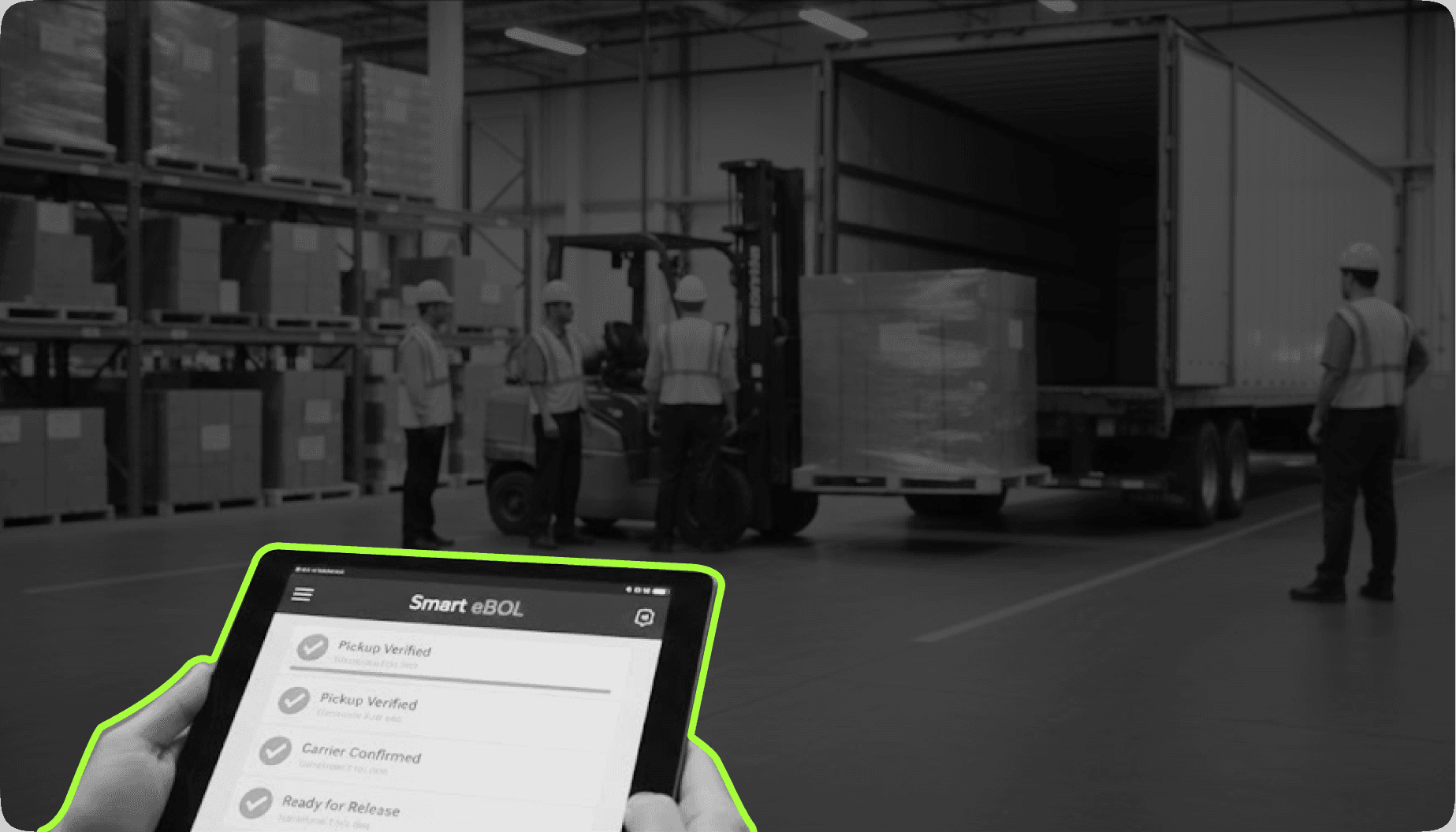
The difference between recovering stolen cargo and writing off a total loss often comes down to minutes. Traditional paper systems alert you to theft days later—when you call to confirm delivery and discover your shipment never arrived. Smart eBOL systems provide real-time visibility that catches theft in progress.
Providing real-time alerts through automated anomaly detection, modern eBOL platforms monitor for patterns that indicate theft. This builds on the supply chain visibility best practices every logistics operation should implement:
Route Deviation Alerts
When GPS tracking shows a shipment heading away from the delivery destination, the system triggers an immediate alert. Logistics teams can contact the carrier and driver directly—before the cargo reaches a location where recovery becomes impossible.
Unauthorized Stop Detection
Cargo thieves often transfer stolen freight to different vehicles at intermediate locations. Smart BOL systems with IoT integration detect extended dwell times at unauthorized locations and flag high-risk stops near known theft hotspots.
Credential Anomaly Monitoring
When the Federal Motor Carrier Safety Administration updates a carrier's status—insurance cancellation, safety violations, operating authority changes—smart BOL systems catch it immediately. If a carrier's credentials change between booking and pickup, you know before your freight leaves the warehouse.
Pattern Recognition
Automated systems analyze carrier behavior across thousands of shipments to identify anomalies. New carriers requesting high-value loads. Multiple companies operating from the same IP address. Pickup requests that don't match typical carrier patterns. These red flags trigger verification before—not after—cargo moves.
Early Detection Response Times
Threat Type | Paper BOL Detection | Smart eBOL Detection |
|---|---|---|
Fictitious pickup | 1-7 days (at delivery) | Blocked at pickup |
Route deviation | 1-7 days (at delivery) | < 15 minutes |
Credential compromise | Never detected | < 5 minutes |
Document tampering | Often never detected | Instant |
Key Takeaway: Early detection is the difference between preventing theft and documenting it. When anomaly detection triggers an alert within minutes of suspicious activity, logistics teams can intervene while cargo is still recoverable. Paper systems only tell you what you lost.
Five-Layer Carrier Verification: How eBOL Systems Prevent Unauthorized Access to Your Supply Chain
Preventing unauthorized access to your shipments requires more than checking credentials once at booking. Carrier status changes constantly—insurance lapses, safety violations accumulate, operating authority gets revoked. Effective supply chain protection requires continuous verification across multiple dimensions. (For a complete cargo theft prevention checklist, see our detailed guide.)
Layer | What It Verifies | Theft It Stops | Frequency |
|---|---|---|---|
DOT/MC | Operating authority vs. FMCSA database | Fake carriers, stolen MC numbers | Every load |
Insurance | Real-time coverage status | Expired/fraudulent certificates | Every load |
Safety | CSA scores, violations, accidents | High-risk motor carriers | Continuous |
Fraud Detection | Pattern analysis, IP monitoring | Double-brokering, theft rings | Real-time |
Live Tracking | GPS location, route, dwell time | Cargo diversion, theft in transit | Continuous |
When eBOL documentation integrates with five-layer verification, every touchpoint becomes secured. BOL creation triggers automatic carrier validation. Real-time data confirms the verified driver has your freight. Route deviations generate alerts. And the complete audit trail creates accountability that paper systems simply cannot match.
Industry-Specific Cargo Theft Protection: Electronics, Luxury Goods, and Consumer Products
Different commodities face different theft risks. Smart eBOL systems allow logistics teams to apply appropriate security protocols based on cargo value and theft patterns:
Electronics and High-Value Technology
Electronics remain the most targeted commodity for cargo theft, with average incident losses exceeding $400,000. Electronics cargo theft prevention requires enhanced verification protocols, mandatory real-time tracking, and restricted carrier pools with proven security records.
Luxury Goods and High-End Retail
Luxury goods face unique risks from organized retail crime networks that can quickly fence stolen merchandise. Our luxury goods theft prevention strategies cover the specialized protocols these shipments require.
Consumer Goods and Retail
The consumer goods theft crisis has accelerated as thieves target easily resold products. eBOL systems help retail freight security by creating visibility into every handoff point where theft typically occurs.
Warehouse and Distribution Center Security
Cargo theft doesn't just happen on the road. Warehouse theft prevention integrates with eBOL systems to verify driver identity at pickup gates and create documentation that prevents unauthorized release of cargo.
How Freight Brokers and Third-Party Logistics Providers Use Smart BOL to Reduce Cargo Crime
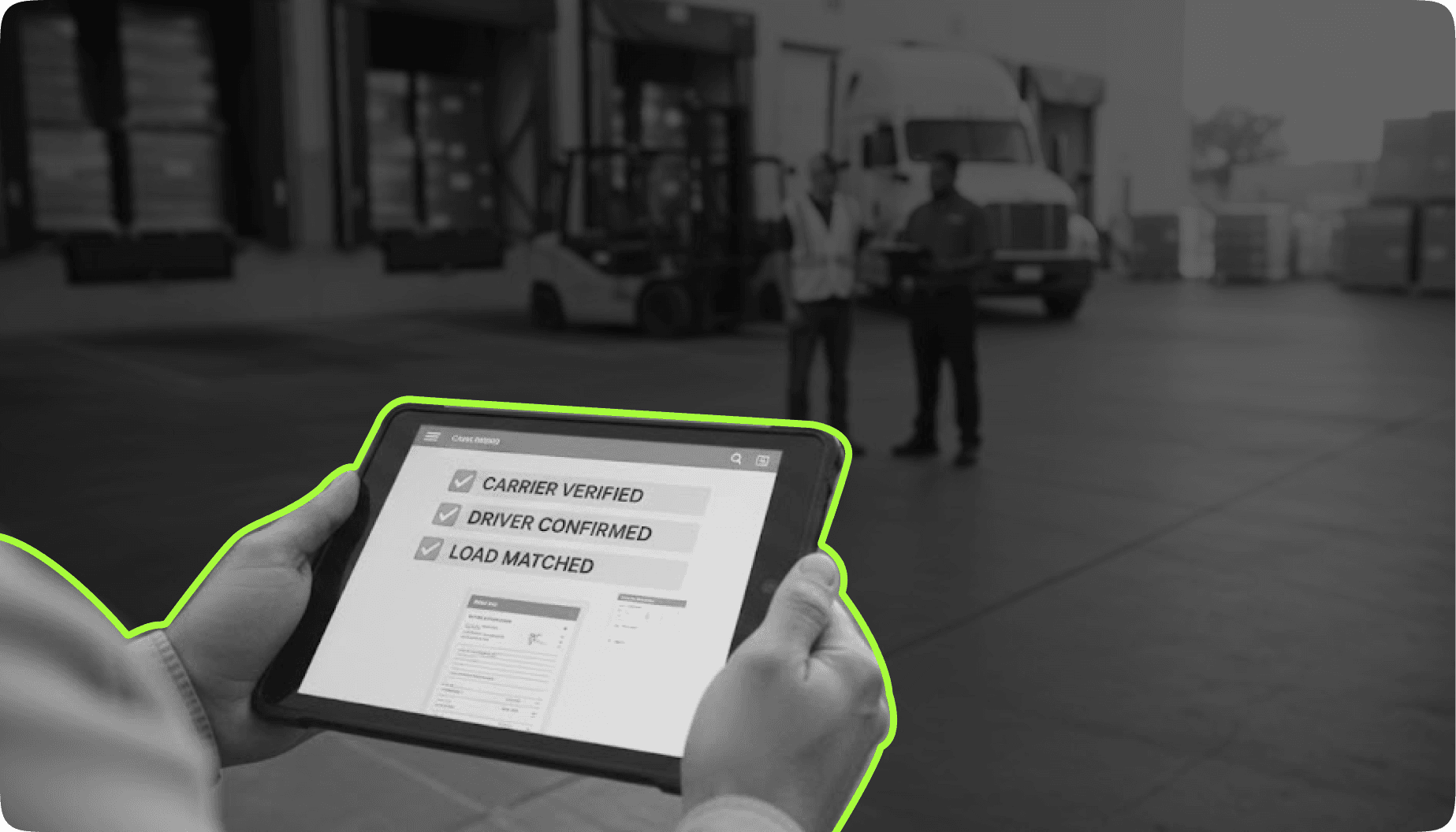
Third-party logistics providers and freight brokers face unique cargo theft challenges. They're responsible for carrier selection, but often lack visibility into what happens after dispatch. When thieves infiltrate carrier networks, 3PLs bear the liability—even when they followed reasonable vetting procedures.
Smart eBOL systems help logistics companies reduce the risk of fraud across their carrier networks:
For Freight Brokers:
Automated carrier verification before every load assignment
Real-time visibility that keeps brokers informed without constant carrier calls
Audit trails that demonstrate due diligence when disputes arise
Tamper-evident documentation that protects against fraudulent claims
For Third-Party Logistics Providers:
Streamlined workflow across multiple clients and carrier relationships
Consistent documentation standards that reduce compliance risk
Centralized alert management for theft threats across all operations
Client reporting that demonstrates supply chain protection value
According to FreightWaves analysis of logistics industry fraud patterns, brokers who implement automated verification and real-time tracking see significantly lower fraud incident rates than those relying on traditional vetting procedures alone.
Integration with TMS and Warehouse Management Systems: Streamlining Your Logistics Workflow
Effective cargo theft prevention can't exist in a documentation silo. Smart eBOL systems must integrate with your transportation management systems (TMS), warehouse management system (WMS), and existing logistics operations to automate protection without adding workflow friction.
System Type | Timeline | Integration Method |
|---|---|---|
TMS Platforms | 2-4 weeks | REST API, automated carrier verification |
Warehouse Management | 1-3 weeks | Direct sync, pickup verification workflows |
Carrier Networks | 3-6 weeks | EDI/API hybrid, driver app deployment |
IoT/Tracking Devices | 1-2 weeks | Real-time data feed integration |
Key integration benefits:
Automated carrier verification at load tender: TMS sends load details, eBOL system validates carrier before assignment
Warehouse pickup authentication: WMS receives driver verification before releasing cargo
Real-time tracking without manual check-calls: Providing real-time location data directly to logistics teams
Automated alert routing: Anomaly detection triggers notifications through existing communication channels
For a broader look at how supply chain automation transforms logistics operations, including security automation, see our comprehensive examples guide.
Key Takeaway: Integration is what transforms eBOL from documentation into protection. When carrier verification happens automatically at load tender, when pickup authorization flows to the warehouse, when tracking data syncs without manual intervention—that's when supply chain risk actually decreases.
How eBOL Systems Support Logistics Security Audits and Compliance
Smart BOL documentation doesn't just prevent theft—it creates the audit trails that logistics security audits require. When insurers, regulators, or clients ask how you protect freight, eBOL systems provide documented evidence of your security protocols:
Complete carrier verification records for every shipment
Timestamped GPS tracking data showing chain of custody
Alert history demonstrating threat detection and response
Document integrity verification proving BOLs weren't tampered with
Compliance reporting for C-TPAT, ISO 28000, and other security frameworks
Implementation Guide: Deploying eBOL for Cargo Theft Prevention in Your Logistics Operations
Most logistics operations achieve full eBOL implementation within 4-8 weeks. The key is following a structured approach that addresses theft vulnerabilities systematically while minimizing disruption to existing logistics operations. (Our proven tips for stopping cargo theft provide additional context for building your security framework.)
Phase 1: Risk Assessment (Week 1-2)
Identify high-value shipment lanes. Cargo thieves target specific commodities—electronics, food and beverage, pharmaceuticals. Map where your highest-risk freight moves.
Audit current documentation vulnerabilities. Where do paper BOLs create gaps? Which carrier relationships lack ongoing verification?
Establish baseline metrics. Current theft incident rate, average loss value, time-to-detection when theft occurs.
Phase 2: Integration and Testing (Week 3-5)
Connect TMS and WMS systems. API integration enables automated verification without changing existing workflows.
Deploy carrier onboarding. Legitimate carriers complete verification quickly—driver app installation takes minutes.
Pilot with select shipments. Start with high-value lanes where cargo theft risk is highest. Test alert routing and response procedures.
Validate anomaly detection. Confirm the system catches the red flags that indicate theft in progress.
Phase 3: Rollout and Optimization (Week 6-8)
Train logistics teams. Operations staff need to know how to interpret alerts and respond to threats. Driver verification procedures at warehouse pickup.
Expand to full operations. Roll out from pilot lanes to complete shipment coverage.
Monitor and refine. Track alert accuracy, response times, and any theft incidents. Adjust detection thresholds based on actual patterns.
ROI: Reducing the Risk of Cargo Theft Through Technology Investment
Smart eBOL platforms deliver ROI through prevented theft, reduced processing costs, and operational efficiency. Most operations achieve payback within 4-6 months.
Benefit Category | Annual Savings | How It's Achieved |
|---|---|---|
Theft prevention | $50,000-500,000+ | Prevented losses, reduced claims |
Processing efficiency | $85,000-120,000 | 70% faster documentation |
Error reduction | $45,000-75,000 | 85% fewer data entry errors |
Insurance premium reduction | 10-25% reduction | Demonstrated chain protection |
Key Takeaways
Strategic cargo theft exploits paper BOL vulnerabilities—document tampering, fictitious pickups, and double-brokering all rely on documentation gaps
Smart eBOL systems integrate carrier verification, real-time tracking, and anomaly detection to catch theft in progress
Five-layer verification (DOT, insurance, safety, fraud detection, live tracking) prevents unauthorized access to shipments
Integration with TMS and warehouse management systems automates protection without adding workflow friction
Implementation takes 4-8 weeks with ROI achieved through prevented theft and operational efficiency
Early detection—minutes vs. days—is the difference between cargo recovery and total loss
Build the Supply Chain Protection Your Freight Demands
Cargo theft thrives in the gaps between carrier booking and pickup verification, between dispatch and delivery confirmation, between what's on paper and what's actually happening with your shipment. Every gap is an opportunity for organized crime to steal freight.
HaulerHub closes these gaps. We're not just digitizing your bill of lading—we're building the trust infrastructure that modern logistics demands. Five-layer carrier verification. Real-time visibility with anomaly detection. Tamper-evident documentation integrated with your TMS and warehouse management system. Direct shipper-carrier connections that eliminate the touchpoints where thieves infiltrate supply chains.
Built by operators who've paid the freight fraud tax for a decade. ITF Group runs a $200M freight operation. We built the platform we wished existed—supply chain protection created by people who understand cargo crime because we've been its target.
Ready to reduce the risk of cargo theft across your logistics operations? Contact HaulerHub to see how verified carrier connections and real-time visibility protect your freight.
Related Resources
Freight & Cargo Security: Best Practices to Prevent Theft in 2025
Retail Freight Security: The Complete Guide to Protecting Your Supply Chain in 2025
E-Commerce Shipment Fraud: Empowering Merchants to Win Against Fraudsters in 2025
How to Maximize Freight Visibility in Your Supply Chain: A Complete Guide for Shippers
FAQ
How does eBOL prevent fictitious pickups?
Smart eBOL systems verify carrier credentials against FMCSA in real-time before creating documentation. Driver identity is authenticated at pickup. GPS confirms the verified truck is at your warehouse. If credentials don't match or verification fails, the BOL isn't created and cargo doesn't move.
What happens when anomaly detection triggers an alert?
Alerts route to designated logistics team members through their preferred channels—SMS, email, app notification. The system provides specific threat details: route deviation direction, credential change type, or pattern anomaly identified. Teams can contact the carrier directly through the platform to verify or intervene.
Can eBOL systems integrate with our existing load board relationships?
Yes. Smart BOL platforms add verification layers on top of existing carrier sourcing. When you book a carrier through a load board, the eBOL system validates credentials before documentation is created. This catches compromised carriers that passed initial load board vetting.
How quickly can legitimate carriers complete verification?
Carriers with valid credentials complete onboarding in minutes. Driver app installation takes 5 minutes. The verification process is designed to be frictionless for legitimate carriers while creating barriers for thieves attempting to pose as motor carriers.
What if theft occurs despite eBOL protection?
The complete audit trail—carrier verification records, GPS tracking data, timestamp logs, communication history—provides evidence for law enforcement and insurance claims. Recovery rates improve significantly when logistics teams have real-time data showing exactly when and where theft occurs.
Checkout other blogs


Stay ahead of the supply chain.
Break free from costly and complex systems. Sign up with HaulerHub now and make shipping a breeze.