Best GPS Tracking Solutions for Preventing Cargo Theft: Why Technology Alone Isn’t Enough
Mar 18, 2026
Scroll to explore
TLDR
Cargo theft losses surged 60% to $725 million in 2025 — criminals target high-value shipments with strategic methods, not brute force.
GPS systems deliver real-time visibility and zone alerts, but cannot verify carrier identity or prevent fictitious pickups.
A GPS tracker becomes a theft prevention tool only when paired with carrier verification and direct shipper-to-carrier connections.
Integrated platforms combining five-layer compliance with asset tracking close the gaps that broker handoffs create across the supply chain.
The freight industry lost nearly $725 million to cargo theft in 2025 — a 60% surge year-over-year, per Verisk CargoNet. The average stolen shipment hit $273,990. Every fleet manager’s instinct is the same: invest in GPS tracking. That instinct is half right. Real-time tracking is foundational to cargo security — but theft incidents still rose 18% despite widespread adoption. Cargo thieves aren’t outsmarting your tracker. They’re exploiting gaps your tracker can’t see.
Why Cargo Theft Losses Surged 60% Despite GPS Tracking Systems
If GPS devices were enough to prevent theft, losses wouldn’t be climbing. The disconnect: strategic theft — involving document fraud, fictitious pickups, and stolen carrier identities — now drives the majority of high-value losses across the United States and Canada. These cargo theft methods don’t require touching the vehicle. Criminals impersonate a legitimate carrier and convince a shipper to hand over freight willingly.
Every broker handoff creates another opportunity for this deception. When loads pass through multiple intermediaries, nobody has full visibility into who shows up at the dock. The shipment’s GPS may be active, but if the driver uses a stolen MC number, real-time tracking just tells you where your stolen goods are heading. GPS tracking provides location data, not identity verification — and in a freight landscape defined by theft patterns exploiting trust, location alone doesn’t reduce theft risk.
How GPS Tracking Helps Prevent Cargo From Theft — And Where It Falls Short
Real-time tracking uses cellular connectivity to provide real-time location updates on vehicles and assets. Geofencing establishes virtual boundaries — when a trailer enters or exits an unauthorized zone, alerts fire immediately. Tamper detection flags unauthorized access through door sensors and motion detectors, delivering real-time visibility and alerts that make it easier to locate and recover stolen assets quickly.
These tracking capabilities help prevent straight theft and improve recovery of tracked assets. But they leave blind spots against the fastest-growing cargo theft methods:
Verify carrier identity: vehicle tracking doesn’t confirm whether the driver is legitimate
Detect unauthorized credential use: stolen MC numbers and forged documents are invisible to a GPS tracker
Close broker-chain gaps: when loads pass through intermediaries, tracking can help locate the trailer but can’t confirm who’s hauling it
The gap isn’t in the technology. It’s in the logistics model surrounding it. Like GPS alone, no single sensor solves a structural problem.
What Fleet Managers Should Demand From a GPS Tracker and Cargo Security Solution
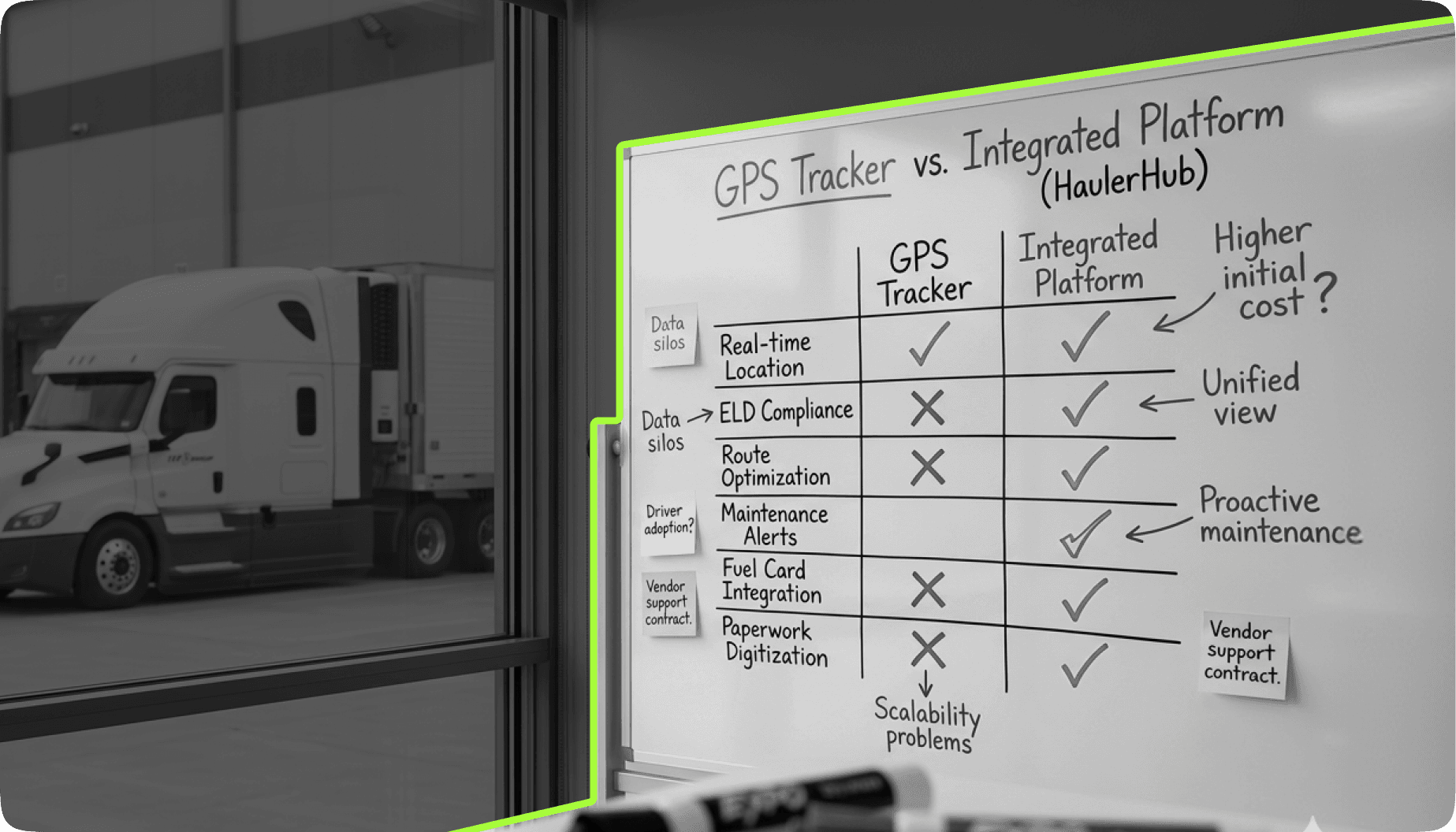
Most guides ranking gps tracking devices compare battery life and alert radius. Those specs are table stakes. GPS tracking provides location data — but the real differentiator is the verification, communication, and compliance layers around the tracker. The best practices for securing your fleet start with carrier identity, not hardware specs.
Capability | Standalone GPS Tracker | Integrated Platform |
Real-time GPS | Yes | Yes |
Geofencing | Yes | Yes + route intelligence |
Carrier verification | No | Five-layer compliance |
Detect fictitious pickups | No | Credential validation pre-pickup |
Direct driver communication | No | Yes — no broker chain |
Recover stolen assets | Location data only | Location + verified custody chain |
Source: HaulerHub platform comparison, 2026.
A standalone tracker is a sensor. A cargo theft prevention solution is an ecosystem. The question every shipper should ask: is my carrier verified, or am I trusting a broker’s word?
How Direct Carrier Connections Turn GPS Into a Tool That Prevents Cargo Theft
When a shipper connects directly with a verified carrier — no broker intermediary, no re-brokered handoffs — every piece of GPS data becomes actionable. You know who the driver is. You can communicate directly. You can confirm the person at the dock matches the credentials in the system. That’s how tracking prevents cargo theft: not through hardware alone, but through verified connections that give tracking information real meaning.
This is what HaulerHub, built by ITF Group’s $200M freight operation, delivers. The platform combines five-layer carrier compliance — DOT verification, insurance validation, safety rating, fraud detection, and live fleet tracking — into a single security layer. Every carrier is continuously verified. No fictitious operators. No expired insurance. No stolen identities. The result: customer trust built on infrastructure, not promises.
Paired with advanced GPS and asset tracking, zone-boundary alerts reference your verified driver, not an unknown subcontractor. If a trailer is stolen or diverted, you have a verified chain of custody for law enforcement. For shippers paying 15–30% in broker markups, direct connections on platforms like HaulerHub deliver superior security at a fraction of the cost. Shippers pay less, carriers earn more, and theft with GPS-verified direct connections drops from likely to preventable.
Key Takeaways
GPS tracking is necessary but insufficient — it delivers real-time visibility but can’t verify carrier identity or stop cargo theft incidents involving fictitious pickups.
Losses hit $725M in 2025 because organized crime exploits trust gaps in broker-mediated freight, not hardware limitations.
Evaluate GPS as part of an integrated platform: carrier verification, direct communication, and continuous compliance monitoring.
Direct shipper-to-carrier connections turn GPS from a recovery tool into active loss prevention by closing identity and visibility gaps across the supply chain.
Stop Tracking Theft. Start Preventing It. See how five-layer carrier compliance and real-time GPS secure your freight before it moves. |
FAQ
Q1. How does GPS tracking prevent cargo theft?
GPS tracking helps prevent theft through real-time location data, geofencing alerts when a trailer enters or exits unauthorized zones, and tamper detection. It works most effectively when combined with carrier verification that stops fictitious pickups before freight leaves the facility. Without identity verification, even advanced GPS tracking documents theft rather than preventing it.
Q2. What types of GPS devices work best for different types of trailers?
The best devices combine cellular connectivity to provide continuous updates, long battery life, covert installation, and integration with fleet tracking platforms. Hardwired units suit powered vehicles; battery-powered trackers with five-year lifespans fit unpowered trailers. Advanced GPS tracking includes door sensors to detect unauthorized access to cargo shipments.
Q3. Can GPS help recover assets after vehicle theft or cargo theft occurs?
Yes. Real-time GPS makes it significantly easier to locate and recover stolen goods. Recovery rates improve when location data pairs with verified carrier records, giving law enforcement a clear custody chain. Platforms that track vehicles and assets through verified connections provide stronger evidence than standalone location tracking alone.
Q4. Why isn’t GPS tracking alone enough to prevent cargo theft?
Because the fastest-growing methods don’t require physically stealing a vehicle. A tracking device is blind to identity fraud. Effective prevention requires GPS combined with carrier compliance, direct communication, and fewer broker handoffs where cargo thieves exploit information gaps.
Checkout other blogs



Stay ahead of the supply chain.
Break free from costly and complex systems. Sign up with HaulerHub now and make shipping a breeze.