How to Reduce Freight Costs During Tariffs: The Hidden Markup You Can Eliminate Today
Dec 3, 2025
Scroll to explore
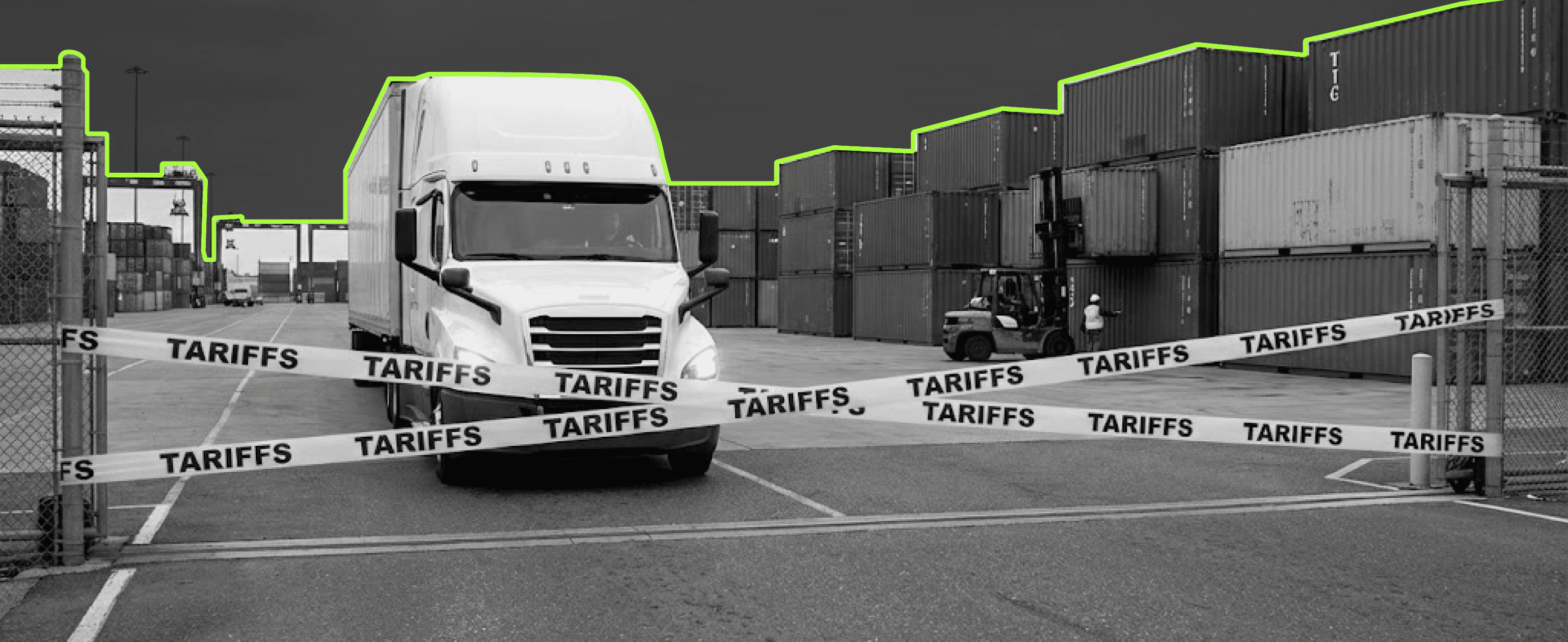
Tariffs are eating your margins. You already know this.
What you might not realize is that tariffs aren't the only tax on your shipments—and unlike trade policy, one of those costs is entirely within your control.
Every logistics guide tells you the same thing: tariff rates are at historic highs, supply chain disruptions are mounting, and shippers need to "stay informed." That's not strategy. That's a weather report.
Here's what those guides skip: while you're absorbing 25-50% tariff increases on imported goods, you're simultaneously handing freight brokers another 25-30% markup on every shipment. That's not a cost of doing business—it's a tax on companies that haven't modernized their logistics.
This guide breaks down exactly how to reduce shipping costs during tariffs by focusing on what you can actually control—starting with the expenses that disappear the moment you cut out the middleman.
The Real Impact of Tariffs on Freight Shipping Costs in 2025
Most shippers think of tariffs as a single cost layer. That's only half the story.
When tariff changes raise your landed cost by 30%, that higher value flows through to freight rates, insurance premiums, and broker commissions calculated as a percentage of shipment value. Consider the math on a $100,000 shipment:
Cost Layer | Traditional Model | Direct Connection Model |
Product Cost | $100,000 | $100,000 |
Tariff (30%) | $30,000 | $30,000 |
Broker Markup (25%) | $32,500 | — |
Platform Fee (10%) | — | $13,000 |
Total Logistics Cost | $162,500 | $143,000 |
Savings | — | $19,500 |
That's $19,500 in savings on a single shipment—not by avoiding tariffs you can't control, but by eliminating a middleman markup you can.
The U.S. has implemented the highest tariff rates in over a century. China-origin goods face cumulative rates reaching 30-54%, with some categories hitting 86.5%. Canada and Mexico face 25-35% duties on non-USMCA goods. China's retaliatory port fees—currently $56 per ton, rising to $157 by 2028—add another layer rippling through ocean freight rates.
Origin | Base Tariff Rate | Additional Fees | Total Impact |
China | 30% + Section 301 | Port fees ($56-157/ton) | 45-55%+ |
Vietnam | 46% reciprocal | Transshipment scrutiny | 46%+ penalties |
India | 25-50% | Declining volumes | Variable |
Canada (non-USMCA) | 35% | Steel/aluminum at 50% | 35-50% |
Mexico (non-USMCA) | 25% | Auto parts targeted | 25%+ |
BCG research reported by FreightWaves shows nearly 80% of shippers report cost increases from tariffs, while almost 70% are actively seeking ways to cut costs—with contract renegotiation as their primary lever.
But renegotiating with the same broker who's taking 25-30% of every shipment? That's optimizing around the edges while ignoring the structural problem at the center.
Key Takeaway: Tariff impacts in 2025 aren't temporary disruptions—they're the new baseline. Shippers who treat this as a cost-cutting catalyst will outperform competitors waiting for policy relief.
How to Navigate Tariff Challenges and Protect Your Margins
Real cost management requires separating what you can't control from what you can.
You cannot control tariff rates, trade regulations, or policy timing. The World Customs Organization sets harmonized system codes. Governments impose duties. Global trade negotiations move on political timelines, not your fiscal calendar.
What you can control is your logistics cost structure—specifically, who sits between you and the carriers moving your freight.
You Can't Control | You Can Control |
Tariff rates by country | Which logistics providers you use |
Tariff classification requirements | Whether you pay broker markups |
Port fees and duties | Carrier relationships and rates |
Trade policy timing | Mode selection (FTL, LTL, intermodal) |
Most shippers respond to rising tariffs by pressuring existing 3PL providers for rate reductions. This has diminishing returns—your broker can only squeeze carriers so far, and they're not volunteering to reduce their own margin.
BCG's analysis of tariff impacts confirms shippers are pushing logistics providers for lower rates—but when tariff exposure consumes 30-50% of product cost, a shipper paying $500,000 annually in broker fees could redirect that capital toward strategies that actually mitigate tariff impacts.
Key Takeaway: You can't negotiate with customs, but you can eliminate the middleman markup compounding your tariff pain on every shipment.
Lower Shipping Costs by Eliminating Broker Markups

Here's the math logistics providers hope you never run.
Traditional freight brokers charge 15-30% of your total shipment cost. When tariffs add 30-50% to imported goods, that broker percentage applies to the inflated total. Your tariff pain becomes their revenue opportunity.
Direct connection platforms flip this entirely. Instead of percentage-based markups that scale with your costs, you pay flat platform fees of 7-10%—facilitating direct carrier relationships rather than replacing one middleman with another.
Annual Freight Spend | Broker Model (25%) | Direct Platform (10%) | Annual Savings |
$500,000 | $125,000 | $50,000 | $75,000 |
$1,000,000 | $250,000 | $100,000 | $150,000 |
$2,500,000 | $625,000 | $250,000 | $375,000 |
The broker value proposition rests on carrier access, rate negotiation, and operational expertise. Technology has disrupted all three. Digital platforms connect shippers directly with thousands of vetted carriers. Matching algorithms find capacity at your target price. Automated compliance checking, digital BOL systems, and real-time GPS tracking replace "I'll check with the driver and call you back."
Function | Traditional Broker | Direct Platform |
Carrier Vetting | Variable, often minimal | 5-layer compliance verification |
Shipment Visibility | Periodic updates via phone/email | Real-time GPS tracking |
Communication | Through broker intermediary | Direct driver messaging |
Pricing Transparency | Hidden markup | Flat, visible platform fee |
Payment Speed | 30-45 days to carrier | 7-14 days to carrier |
Carriers benefit too. When shippers pay less to middlemen, carriers receive faster payment and direct relationships rather than brokers playing both sides. This isn't just cost reduction—it's a healthier freight ecosystem.
Key Takeaway: Broker markups of 25-30% are indefensible when tariff exposure is already consuming your margins. The middleman model isn't broken—it's obsolete.
Supply Chain Diversification Strategies That Reduce Freight Costs
Supply chain diversification is the default tariff strategy recommendation. Shift production closer to home. Develop alternative suppliers. Reduce high-tariff origin dependence.
This advice isn't wrong—it's incomplete. Diversifying your supplier base while maintaining the same broker-dependent logistics model is like changing your diet without addressing the metabolism problem.
Nearshoring creates new requirements. Shorter distances don't automatically mean lower costs—especially if you're routing domestic transportation through the same 3PL relationships that extracted 25-30% on international freight shipping.
Sourcing Strategy | Tariff Impact | Logistics Consideration |
China (current) | 30-55%+ duties | Longest lead time, highest exposure |
Vietnam/Southeast Asia | 20-46% duties | Transshipment scrutiny |
Mexico (USMCA) | 0-25% depending on qualification | Cross-border complexity |
Domestic U.S. | No import duties | Higher production, lower freight costs |
Adding suppliers in new regions typically means adding complexity—more origins, more carriers, more relationships. This is where brokers claim value: consolidated expertise across fragmented global supply chains. But complexity becomes a profit center for intermediaries. Every new lane creates billing opportunities.
Modern platforms handle diversification differently. Direct carrier connections scale across origins without adding intermediary layers. Unified tracking works regardless of whether freight originates in Shenzhen, Monterrey, or Memphis.
Key Takeaway: Diversification only reduces costs if your logistics model scales efficiently. Direct platforms let you diversify sourcing while consolidating costs.
Logistics Technology and Optimization for Changing Tariff Requirements
Tariffs and regulations create documentation burdens that didn't exist five years ago. Tariff codes demand precision—misclassification triggers penalties, delays, and customs audits.
This is where brokers claim irreplaceable value. "You need us to navigate tariff classification, manage compliance, handle documentation." It's compelling—until you realize technology handles these functions better, faster, and without the 25-30% markup.
What modern platforms deliver:
Real-time tariff visibility: Live duty rates by classification and origin, enabling cost modeling before committing to shipments
Automated compliance: Five-layer carrier checks—DOT verification, insurance validation, safety ratings, business legitimacy, driver screening—happening automatically
Digital documentation: Tamper-proof BOL systems flowing through customs without manual processing delays
Predictive optimization: Route analytics, load matching algorithms, and consolidation tools that brokers have no incentive to provide
A broker paid on percentage earns more when your freight costs more. Their optimization ceiling is your cost floor. Direct platforms optimize for your margin, not theirs.
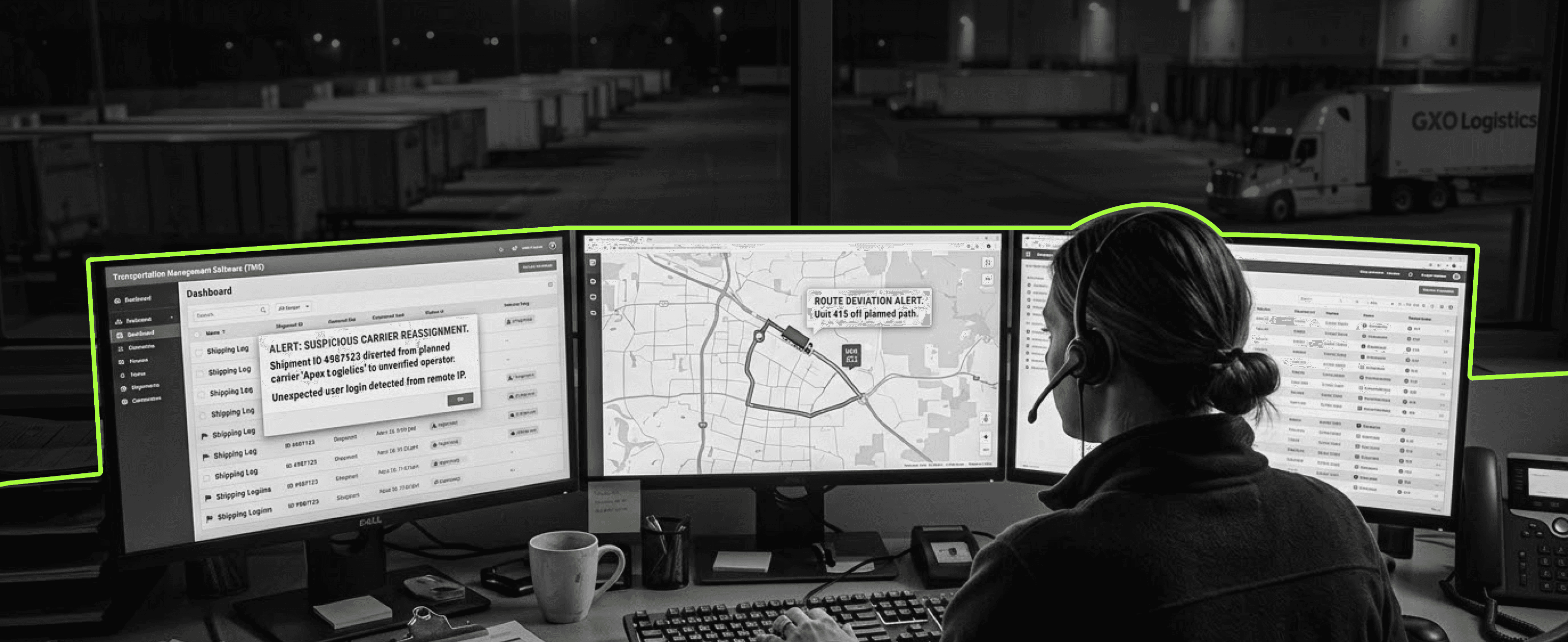
For shippers managing significant volume, platform technology integrates directly with existing systems—ERP, WMS, TMS—eliminating duplicate data entry and creating seamless information flow. When tariff rates change, integrated systems update landed cost calculations automatically.
Key Takeaway: Technology eliminates the complexity brokers weaponized to justify their margins—at a fraction of the cost.
How to Lower Shipping Costs Amid Rising Tariffs: Your Action Plan
Tariffs aren't temporary. The trade regulations reshaping global supply chains reflect structural shifts, not cyclical adjustments reversing with the next administration.
The Action Framework:
Quantify current broker spend. Pull 12 months of freight invoices. For most shippers, broker margin is 20-30% of total spend.
Map highest-volume lanes. Your top 10 lanes likely represent 60-80% of freight costs. Start there.
Evaluate direct platforms. Look for 5-layer carrier vetting, real-time visibility, direct driver communication, and transparent fee structures.
Run a parallel test. Route a portion through a direct platform. Compare costs, visibility, and reliability. The data will make the decision obvious.
You cannot negotiate with customs. You cannot lobby tariff rates lower. You can eliminate the 25-30% logistics markup compounding your tariff pain on every shipment.
The shippers who thrive in a high-tariff environment won't be those who absorbed costs amid uncertainty and hoped for relief. They'll be those who recognized which costs were mandatory and which were optional—then eliminated the optional ones entirely.
Stop Paying the Broker Tax on Top of Tariffs
HaulerHub connects shippers directly with vetted carriers—no middleman markup, no hidden fees, no information blackouts.
What you get:
10% platform fee vs. 25-30% broker margins
5-layer carrier compliance verification
Real-time GPS tracking and direct driver communication
Digital documentation that streamlines customs processing
24/7 human support when it matters
[Calculate Your Savings →] See exactly how much you're losing to broker intermediaries—and what those dollars could do when tariffs are already taking their cut.
[Request a Demo →] Bring your highest-volume lanes and current broker costs. We'll show you the math on your actual freight.
Checkout other blogs



Stay ahead of the supply chain.
Break free from costly and complex systems. Sign up with HaulerHub now and make shipping a breeze.